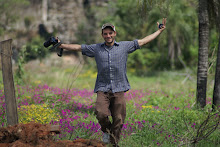
Human beings’ desire for belonging is a shared and fundamental trait. Our creation of a bureaucratic system seemingly designed to expressly deny the fulfillment of this desire is equally universal and all together astounding.
I arrived in Turkey on a student visa painlessly obtained over the summer via two trips to the New York City Turkish Consulate, a transaction fee of $37, the completion of a few documents and the submission of a handful of those ubiquitous passport size photos.
With my Turkish visa good for a year I cheerfully assumed that I was footloose and fancy free upon clearing immigration at Istanbul’s International Airport. Safe and sound upon foreign soil, it was time to tuck my passport carefully away and begin to build a new life in Turkey as a foreign exchange student excited to learn Turkish.
However, upon further scrutiny of the finer print of Turkish immigration procedures during my initial weeks of stay in country and the collective rumblings of fellow University students I quickly realized that much more was involved in order to claim my Turkish residency necessary for my year -long study abroad program.
Stated plainly, although in Turkish, on the back side of my immigration card was the single sentence: ‘Turkish Student Visa holders need to apply for a Residency Permit within thirty days of arrival.’ Further investigation, through snap translations by any Turk with the slightest knowledge of English willing to help turned up the fact that the application for a Residency Permit with its attendant laundry list of requirements needed to be completed in person and directly within those now dwindling thirty days. The kicker being that all information was to be provided in Turkish and required to be answered in Turkish.
Arriving in Istanbul not speaking a word of Turkish, suddenly my basic, although intensive, Turkish language classes became woefully inadequate. Rather than grant me license to live in Turkey for the year, my student visa in effect had merely gained me admission to the true Turkish Bureaucratic Dance of Belonging for long-term residency. I had thirty Days or I would face undisclosed legal sanctions.
Although I pride myself on being a nimble and limber fellow ready for any and all challenges, here I was now squarely out of my league. Bank statements, official documents from the University, a street address of an apartment I was still looking for, mother and father’s name all had to procured and translated into Turkish. Copies in triplicate, Turkish, Turkish, Turkish, those pesky passport photos again, this time in an absurd amount, everything type written and in capital letters.
Thirty Days. This was going to take some serious linguistic, cultural, administrative and bureaucratic gymnastics.
After an all consuming and endless amount of scheming and treasure hunting for directions, paperwork and translations, that at times was tedious, ridiculous and outright illogical, I arrived at the fortress-like Foreign Residence Office ready to begin the intricate Turkish Bureaucratic Dance of Belonging. I was certainly not the lead for this number and only hoped that I could follow the dance steps closely.
There I was, having arrived just as the building opened but my no means first in line, between the girl from the Ukraine and the woman from Kyrgyzstan; a young Lebanese man pressing tightly against my back as he in turn jockeyed for position with the multitude of applicants behind him. With my hands clenched tightly to the counter so ingeniously constructed whereas one had to simultaneously stand on tip toes and yet bend down, head against the grimy Plexiglas, in order to “converse” with the woman behind the counter I held my ground. The throng of people pushing from behind was constant and physical. I flexed my arms outward in response to protect my space. I had waited hours to reach this counter and I wasn’t going anywhere.
Beyond the great divide of Plexiglas sat the finest assembly of Turkish bureaucratic officers. Diligently, if lifelessly, cutting and pasting and stamping and laminating. Enthusiasm having been checked at the door, work continued a pace as the overhead air condition leaked water onto a dangerously large puddle growing in the middle of the floor that threatened the spider web of extension cords that criss–crossed the office. As the officer workers mindlessly stepped over this mid office water hazard without a second thought, the young care free chai server, dishing out small shot glasses of piping hot sweet tea on a massive silver platter to all workers looking for an excuse to remain unproductive adeptly danced around the puddle without soaking his feet or spilling a single drop of tea.
Shoving my paperwork through the mail slot of an opening, there was a pit that began to grow in the bottom of my stomach and resonated to the tips of my fingers. As a momentary pause to gather up my documents turned into an eternity of scrutiny, I prayed silently that everything was duly in order and the immigration clerk wouldn’t ask me any hard questions –any question at all really— and the desperate pleas of “please do not send me back to the end of the line” were hard to suppress.
Within a few moments, papers were shuffled, stamps were meted out and signatures were scribbled. The only true human interaction was a quick smile as the woman behind the counter quickly grabbed my eighty Turkish Lira as payment for services rendered.
Three times the woman said that I was finished. Three times I didn’t believe her until she spelled it out in no uncertain terms that all I needed to do now was to comeback next week to pick up my official residency documents. Not wanting to shift my weight even an inch and allow some else, equally as frantic and frazzled, to push in from behind and steal away my coveted spot at the counter, I didn’t leave until she raised her hand, extended her finger and pointed me to the door. I still had my doubts about the success of my residency application and thus my ability to remain in Turkey as I followed her silent instructions away from the counter and melted back into the masses.
The Stars and Stripes forever. Without question, I am an American by birth and more importantly by choice. However, upon returning to scene of the crime exactly one week later – again early but nowhere near first in line—and receiving my Turkish Residence Card, the sky has never been bluer, the Turkish flag never flown more proudly and as I knelt down upon my knee to kiss the ground beneath my feet, the Earth never tasted sweeter.
I practically skipped out of the fortress of Foreign Residence Permits, my heart bursting with song as this Turkish Bureaucratic Dance of Belonging had triumphantly come to a close. As I swiveled and weaved through the crowd in search of the exit –and the light of day— I bade farewell and good luck to those who were just arriving: a young married couple, a woman with a newborn baby, the troupe of foreign students and well dressed but powerless businessmen. Bewildered and exasperated. All looking to belong.
It is of interest to note that most countries and in fact most people are most welcoming when they know that you are leaving. An indefinite stay however always causes a bit of consternation and unfortunately a more reluctant form of acceptance.
Sunday, September 21, 2008
Wednesday, September 10, 2008
SUNDAY MORINING CONGREGATION
Six weeks on in a city six centuries Muslim, I have been able to peel back the hands of time and discover the still thriving religion of the city once known as the Second Rome. Perhaps better stated, I have found the western import of the original Rome, alive and kicking and having weathered the years of a city that pugnaciously sits in the tidal basin of life, religion and history.
Saint Anthony’s Catholic Church
Sent Antuan Kilisise
Istiklal Caddesi
Istanbul, Turkey
Although I enjoyed the opportunity and experience of living in an ardently Muslim neighborhood, albeit in an intensely secular state, complete with headscarves, mosques and pray beads and my Turkish neighbors, most Turks in fact, have welcomed me with unfailing hospitality and warmth, I have longed for the familiar and my own sense of community.
Muslim or not, the five times daily call to prayer sung ethereally in Arabic from the Mosque’s minaret causes one to reflect, to think and ultimately to pray. It is truly a vocal, timely reminder to help keep one’s priorities in check. Even my visits to Mosques throughout the city, although initially historically and architecturally motivated, have provided a time of spiritual quiet, stillness and reflection.
The Blue Mosque (Sultan Ahmet Mosque) and the Aya Sophia notwithstanding. However, the need to participate in the celebration of mass, both a product of my upbringing and a conscious choice of faith from St. Cecilia to Georgetown University and Peace Corps Paraguay to Panama, still remained.
Sunday Morning Mass at Saint Anthony’s welcomes an eclectic mix of Catholics befitting such an international, historic and criss-crossed city.
It is even quite possible to define it as a true catholic gathering of Catholics. Most striking and remarkable was the fact that it happened on an ordinary Sunday in September. A centuries old cathedral, with high arching ceilings and intricately inlaid mosaics located in the heart of Istanbul was standing room only. Presided over by Father Joseph from Romania, the church was filled with parishioners from all walks of life motivated by a sense of faith and duty.
By no means trying to diminish their stature, the standard issue Italians and Spaniards were in attendance. The Korean choir was led by a trio of beautiful Vietnamese vocals and without question, the Filipinos played an active role in the celebration. They however just could not fit into my attempted alliteration. English was the lingua franca of the service. Finally and most intriguing was the unusually (again from my perspective) large proportion of, for a lack of a more intimate and accurate term, Africans present in prayer. It was an awesome sight to see and never one to allow my “demographically discerning eye” rest I am interested in learning their story.
It was truly a powerful and awe inspiring experience to see and feel a cathedral in full swing for the service of daily mass. I could not help but feel reenergized and excited as I stepped out of the shadows of the worn wooden doors and on to the sunlight stone patio, to be greeted by the international parochial community of Catholics who had splintered back into their multitude of languages and identities.
Content to know that I was welcomed back next week.
Saint Anthony’s Catholic Church
Sent Antuan Kilisise
Istiklal Caddesi
Istanbul, Turkey
Although I enjoyed the opportunity and experience of living in an ardently Muslim neighborhood, albeit in an intensely secular state, complete with headscarves, mosques and pray beads and my Turkish neighbors, most Turks in fact, have welcomed me with unfailing hospitality and warmth, I have longed for the familiar and my own sense of community.
Muslim or not, the five times daily call to prayer sung ethereally in Arabic from the Mosque’s minaret causes one to reflect, to think and ultimately to pray. It is truly a vocal, timely reminder to help keep one’s priorities in check. Even my visits to Mosques throughout the city, although initially historically and architecturally motivated, have provided a time of spiritual quiet, stillness and reflection.
The Blue Mosque (Sultan Ahmet Mosque) and the Aya Sophia notwithstanding. However, the need to participate in the celebration of mass, both a product of my upbringing and a conscious choice of faith from St. Cecilia to Georgetown University and Peace Corps Paraguay to Panama, still remained.
Sunday Morning Mass at Saint Anthony’s welcomes an eclectic mix of Catholics befitting such an international, historic and criss-crossed city.
It is even quite possible to define it as a true catholic gathering of Catholics. Most striking and remarkable was the fact that it happened on an ordinary Sunday in September. A centuries old cathedral, with high arching ceilings and intricately inlaid mosaics located in the heart of Istanbul was standing room only. Presided over by Father Joseph from Romania, the church was filled with parishioners from all walks of life motivated by a sense of faith and duty.
By no means trying to diminish their stature, the standard issue Italians and Spaniards were in attendance. The Korean choir was led by a trio of beautiful Vietnamese vocals and without question, the Filipinos played an active role in the celebration. They however just could not fit into my attempted alliteration. English was the lingua franca of the service. Finally and most intriguing was the unusually (again from my perspective) large proportion of, for a lack of a more intimate and accurate term, Africans present in prayer. It was an awesome sight to see and never one to allow my “demographically discerning eye” rest I am interested in learning their story.
It was truly a powerful and awe inspiring experience to see and feel a cathedral in full swing for the service of daily mass. I could not help but feel reenergized and excited as I stepped out of the shadows of the worn wooden doors and on to the sunlight stone patio, to be greeted by the international parochial community of Catholics who had splintered back into their multitude of languages and identities.
Content to know that I was welcomed back next week.

Saturday, August 30, 2008
THE GAS IS ALWAYS GREENER
Without question the numbers speak for themselves - both in terms of the international price of a barrel of crude and the retail price of a gallon at the pump. $110, $120, $130, $140…. 1.89, 2.29. 3.59, 4.02…..
Clock watching these days is a bit passé. Pump price watching is much more in vogue-
To be honest, this is all well and good and will hopefully lead to some necessary, if painful, changes in habit and consumption.
However, without context most of America’s recent complaints about rising gas prices become some what irrelevant and unfounded. Hear me out-
On foot, weaving through the continuously congested streets of Istanbul, I am constantly astounded by a singular number that beckons from the neon towers of all corner gas stations: 2.85 Turkish Lira per 1 Liter of Gas.
Seemingly innocuous at first glance, “hell, where I come from that number is pushing four dollars,” a quick mathematical conversion disabuses an unwitting foreigner’s naivete and reveals the true cost of living.
1 US Dollar = 1.20 Turkish Lira (granted the value fluctuates daily)
1 US Gallon = 3.78 Liters
3.78 x 2.85 (price in Turkish Lira for 1 liter) = 10.773 Turkish Lira
Thus here in Turkey, the price of ONE Gallon of Gas is 10.773 Turkish Lira
Or, to make it that much more explicit:
IN TURKEY ONE GALLON OF GAS COSTS 8.97 DOLLARS
(without splitting hairs, any where between 8 and 10 bucks).
10.773 Turkish Lira / 1.20 Turkish Lira = 8.97 USD
Yowser! How in the….? Who in their right mind…? Something needs to be done about this… I stammer, to no one as a multitude of pedestrians rushes by me on their way to work and cars queue up without a second thought at the pump---
Am I the only one who is indignant here?
That remains to be seen, but the cold, unsatisfactory answer to why gas prices are so high here in Turkey is TAXES. The government has placed such a high tax burden on gas consumption to try to dissuade the public from excessive consumption.
Judging by the middle of the day city wide traffic jam, urban infrastructure is certainly not up to par and this tax scheme hasn’t quite had its desired effect (although government coffers are pleasantly swollen).
And so it is, to the every day ordinary Turkish consumer, eight to ten dollars for a gallon of gas- indefinitely.
Ambulatory and car crazy Turks would kill to be in America’s four dollar a gallon shoes-
All situations are different but please do strive for a deeper perspective and plan accordingly.
Post script: On a brighter note- Here in Istanbul cigarettes only cost 3 -4 dollars a pack. Now, I’ll smoke to that.
Clock watching these days is a bit passé. Pump price watching is much more in vogue-
To be honest, this is all well and good and will hopefully lead to some necessary, if painful, changes in habit and consumption.
However, without context most of America’s recent complaints about rising gas prices become some what irrelevant and unfounded. Hear me out-
On foot, weaving through the continuously congested streets of Istanbul, I am constantly astounded by a singular number that beckons from the neon towers of all corner gas stations: 2.85 Turkish Lira per 1 Liter of Gas.
Seemingly innocuous at first glance, “hell, where I come from that number is pushing four dollars,” a quick mathematical conversion disabuses an unwitting foreigner’s naivete and reveals the true cost of living.
1 US Dollar = 1.20 Turkish Lira (granted the value fluctuates daily)
1 US Gallon = 3.78 Liters
3.78 x 2.85 (price in Turkish Lira for 1 liter) = 10.773 Turkish Lira
Thus here in Turkey, the price of ONE Gallon of Gas is 10.773 Turkish Lira
Or, to make it that much more explicit:
IN TURKEY ONE GALLON OF GAS COSTS 8.97 DOLLARS
(without splitting hairs, any where between 8 and 10 bucks).
10.773 Turkish Lira / 1.20 Turkish Lira = 8.97 USD
Yowser! How in the….? Who in their right mind…? Something needs to be done about this… I stammer, to no one as a multitude of pedestrians rushes by me on their way to work and cars queue up without a second thought at the pump---
Am I the only one who is indignant here?
That remains to be seen, but the cold, unsatisfactory answer to why gas prices are so high here in Turkey is TAXES. The government has placed such a high tax burden on gas consumption to try to dissuade the public from excessive consumption.
Judging by the middle of the day city wide traffic jam, urban infrastructure is certainly not up to par and this tax scheme hasn’t quite had its desired effect (although government coffers are pleasantly swollen).
And so it is, to the every day ordinary Turkish consumer, eight to ten dollars for a gallon of gas- indefinitely.
Ambulatory and car crazy Turks would kill to be in America’s four dollar a gallon shoes-
All situations are different but please do strive for a deeper perspective and plan accordingly.
Post script: On a brighter note- Here in Istanbul cigarettes only cost 3 -4 dollars a pack. Now, I’ll smoke to that.
Saturday, August 23, 2008
LIFE ON THE TURKISH STREET
Using a bit of internet resourcefulness and a great deal of on the ground detective work, after two weeks of couch surfing I have officially taken up residence here in the great city of Istanbul. I am just one more immigrant washing up on the shores of time, history and collective memory of this throbbing mega metropolis.
If the city herself does not as yet know that I have arrived, surely my new street has meet my presence with a cautious, curious, welcoming eye. In the heart of Istanbul, in the district of Tophane, the street is a dizzying mix of Turks, Kurds and Gypsies a short walk from the Bosphorus Straight. Tophane in Turkish actually means cannonball foundry (or literally house of the cannonball) and is a reference to the defensive cannonball foundry which was constructed by one of the first Ottoman Sultans in the late 15th century and until today looms large over the neighborhood.
Fortunately these days, enemies of the great city are few and far between and large maritime attacks are no longer en vogue. All that remains are the massive cruise ships which make Istanbul their port of call. Once docked along the quay these cruise ships dwarf the exquisitely constructed mosques that line the Bosphorus and blot out the view to Anatolia, the Asian side of the city. They are indeed that big and thus offer a perversely delicious broadside for an errant, if anachronistic cannonball.
Yet the foundry of Tophane remains silent. Forlorn and brooding, as if there is still a chip on her should, yearning for one more opportunity to lash out and show her bygone Ottoman greatness and potency.
With the neighborhood thoroughly protected, let’s go to the street. Picture scenes from the Godfather, when a young Don Corleone is living in the immigrant tenement neighborhoods of New York City in the early 20th century.
Here is the Turkish version. Four and five stories turn of the century apartment buildings line a narrow, winding street where all windows are open, freshly washed laundry hangs across and every imaginable family member leans out partaking in a daily conversation that must be centuries old.
Family life explodes across every available surface and space as women lower baskets from fourth story windows to haggle and purchase fresh produce from the passing vendor in the streets. Simultaneously cacophonous and melodic, there is an urban Turkish melody that is created. Drifting upwards towards the sky in jabs, rises and lulls the collective speech of the street offers an exotic rendition of an otherwise mundane Turkish daily life.
Having three large windows of my own facing the street, I duly plan to take up my place in the window and join in the Turkish chatter. A basket and rope are on the list of provisions to buy. It will be quite a linguistic challenge to haggle effectively with a man two stories down without receiving bruised tomatoes or incorrect change.
Unlike the young Don Corleone, I do not foresee any roof top escapades but rather my main concern will be to see if I can secure a wireless Internet connection in this throwback of an Ottoman neighborhood.
Do write to the address above. Your mail is always much appreciated and we shall see just how nimble the Turkish post can be. Perhaps you could send it via Carnival Cruise Lines; they are here three times a week
If the city herself does not as yet know that I have arrived, surely my new street has meet my presence with a cautious, curious, welcoming eye. In the heart of Istanbul, in the district of Tophane, the street is a dizzying mix of Turks, Kurds and Gypsies a short walk from the Bosphorus Straight. Tophane in Turkish actually means cannonball foundry (or literally house of the cannonball) and is a reference to the defensive cannonball foundry which was constructed by one of the first Ottoman Sultans in the late 15th century and until today looms large over the neighborhood.
Fortunately these days, enemies of the great city are few and far between and large maritime attacks are no longer en vogue. All that remains are the massive cruise ships which make Istanbul their port of call. Once docked along the quay these cruise ships dwarf the exquisitely constructed mosques that line the Bosphorus and blot out the view to Anatolia, the Asian side of the city. They are indeed that big and thus offer a perversely delicious broadside for an errant, if anachronistic cannonball.
Yet the foundry of Tophane remains silent. Forlorn and brooding, as if there is still a chip on her should, yearning for one more opportunity to lash out and show her bygone Ottoman greatness and potency.
With the neighborhood thoroughly protected, let’s go to the street. Picture scenes from the Godfather, when a young Don Corleone is living in the immigrant tenement neighborhoods of New York City in the early 20th century.
Here is the Turkish version. Four and five stories turn of the century apartment buildings line a narrow, winding street where all windows are open, freshly washed laundry hangs across and every imaginable family member leans out partaking in a daily conversation that must be centuries old.
Family life explodes across every available surface and space as women lower baskets from fourth story windows to haggle and purchase fresh produce from the passing vendor in the streets. Simultaneously cacophonous and melodic, there is an urban Turkish melody that is created. Drifting upwards towards the sky in jabs, rises and lulls the collective speech of the street offers an exotic rendition of an otherwise mundane Turkish daily life.
Having three large windows of my own facing the street, I duly plan to take up my place in the window and join in the Turkish chatter. A basket and rope are on the list of provisions to buy. It will be quite a linguistic challenge to haggle effectively with a man two stories down without receiving bruised tomatoes or incorrect change.
Unlike the young Don Corleone, I do not foresee any roof top escapades but rather my main concern will be to see if I can secure a wireless Internet connection in this throwback of an Ottoman neighborhood.
Do write to the address above. Your mail is always much appreciated and we shall see just how nimble the Turkish post can be. Perhaps you could send it via Carnival Cruise Lines; they are here three times a week
Tuesday, May 20, 2008
PEACE CORPS RESPONSE: Same Fundamentals. A Change in Focus.
With the creation of Peace Corps Response/ Crisis Corps, Peace Corps has taken the development spotlight and shown it on itself: Identifying resources and putting them into practice. With each Close Of Service (COS), Peace Corps worldwide adds to its growing tally of linguistic, technical and culturally competent development professionals. Returning RPCVs to service for short term targeted development projects through Peace Corps Response taps this “in house” resource.
Shifting gears from a traditional Peace Corps service to a Peace Corps Response service does not change the fundamentals of Peace Corps’ mission; however, it does call for a redefinition of the focus, scope and pace of how the objectives are executed.
My name is Leo Redmond. I am the Agroforestry Technical Trainer.
I served as an Agroforesty Volunteer in Paraguay from 2002-2004.
I served as a Crisis Corps Guatemala Volunteer in 2006 in Post Hurricane Stan Disaster Preparedness, Emergency Management and Food Security.
I served as Peace Corps Panama Response Volunteer in 2008 in Food Security.
I worked previously as the Peace Corps Paraguay Agroforestry Technical Trainer between 2005- 2007.
Serving as a Peace Corps Response Volunteer (PCRV) is in a sense, a true embodiment of the old adage, “If I only knew then what I know now.” There is a huge difference between Peace Corps Volunteer Day One and Peace Corps Response/Crisis Corps Volunteer Day One. Rightly so. As a new PCV arriving in a community, you should take a step back and listen; however, as a PCRV, you have the golden opportunity to hit the ground running. You are the linguistic and technical competent extension agent that is capable of making decisions and putting projects into motion. More importantly, with years of field based extension experience, you have the confidence to do so.
There is a subtle but important distinction in the PCRV presence and design which sets it apart from traditional PCV experience. Although trained in a specific skill set, Volunteers are decidedly community based, where as Response Volunteers are more project based. Ideally, a Response Volunteer’s energy and expertise is more targeted to address a defined, expressed need on the part of a host country organization.
The upshot is that Response Volunteer results prove to be more tangible in nature: Plant 5,000 citrus trees, 10,000 coffee seeds. Train 30 community members in proper first aid and emergency management procedures. The short term, three to six month, assignment also means that our work is that much more accelerated. In effect, we step in at the precious moment to connect project materials, technical know how and community involvement in order to put them all into play. It is quite a tantalizing position to be in, but fundamental development tenets must not be overlooked.
Conversely, a traditional PCV experience is comprised of incremental, accumulative progress where at times the efforts and results are more qualitative than quantitative: teaching critical thinking skills, fostering communication, capacity building.
The core of a PCV Service is dedicated to community development and resource identification. Ideally, a PCV helps to set the tone where a community, certain community members or individuals can engage in successful project establishment. In this sense, the focus, scope and pace of a Peace Corps experience is much more evolutionary, fluid and subject to indeterminable fits and starts.
Peace Corps Response Volunteers have a sharper focus, narrower scope and heightened pace of project implementation. Where at the end of our service the project should either be put into motion or completed. Intrinsic risks of a Response Volunteer include becoming involved in too much, too fast, as well as promising more than can be feasible completed in the allocated time of service. Although stationed in a community of 100 families, the objective is to work with 10 targeted/previously selected families.
In the end however, Development, by nature, is designed to be an unfinished business. Traditional two year Peace Corps service is rock bottom, fundamental to setting us all on the way for individual, community and global improvement. A Peace Corps Response Service is a brilliant way to return to the carefully laid foundation and take another important step forward.
Shifting gears from a traditional Peace Corps service to a Peace Corps Response service does not change the fundamentals of Peace Corps’ mission; however, it does call for a redefinition of the focus, scope and pace of how the objectives are executed.
My name is Leo Redmond. I am the Agroforestry Technical Trainer.
I served as an Agroforesty Volunteer in Paraguay from 2002-2004.
I served as a Crisis Corps Guatemala Volunteer in 2006 in Post Hurricane Stan Disaster Preparedness, Emergency Management and Food Security.
I served as Peace Corps Panama Response Volunteer in 2008 in Food Security.
I worked previously as the Peace Corps Paraguay Agroforestry Technical Trainer between 2005- 2007.
Serving as a Peace Corps Response Volunteer (PCRV) is in a sense, a true embodiment of the old adage, “If I only knew then what I know now.” There is a huge difference between Peace Corps Volunteer Day One and Peace Corps Response/Crisis Corps Volunteer Day One. Rightly so. As a new PCV arriving in a community, you should take a step back and listen; however, as a PCRV, you have the golden opportunity to hit the ground running. You are the linguistic and technical competent extension agent that is capable of making decisions and putting projects into motion. More importantly, with years of field based extension experience, you have the confidence to do so.
There is a subtle but important distinction in the PCRV presence and design which sets it apart from traditional PCV experience. Although trained in a specific skill set, Volunteers are decidedly community based, where as Response Volunteers are more project based. Ideally, a Response Volunteer’s energy and expertise is more targeted to address a defined, expressed need on the part of a host country organization.
The upshot is that Response Volunteer results prove to be more tangible in nature: Plant 5,000 citrus trees, 10,000 coffee seeds. Train 30 community members in proper first aid and emergency management procedures. The short term, three to six month, assignment also means that our work is that much more accelerated. In effect, we step in at the precious moment to connect project materials, technical know how and community involvement in order to put them all into play. It is quite a tantalizing position to be in, but fundamental development tenets must not be overlooked.
Conversely, a traditional PCV experience is comprised of incremental, accumulative progress where at times the efforts and results are more qualitative than quantitative: teaching critical thinking skills, fostering communication, capacity building.
The core of a PCV Service is dedicated to community development and resource identification. Ideally, a PCV helps to set the tone where a community, certain community members or individuals can engage in successful project establishment. In this sense, the focus, scope and pace of a Peace Corps experience is much more evolutionary, fluid and subject to indeterminable fits and starts.
Peace Corps Response Volunteers have a sharper focus, narrower scope and heightened pace of project implementation. Where at the end of our service the project should either be put into motion or completed. Intrinsic risks of a Response Volunteer include becoming involved in too much, too fast, as well as promising more than can be feasible completed in the allocated time of service. Although stationed in a community of 100 families, the objective is to work with 10 targeted/previously selected families.
In the end however, Development, by nature, is designed to be an unfinished business. Traditional two year Peace Corps service is rock bottom, fundamental to setting us all on the way for individual, community and global improvement. A Peace Corps Response Service is a brilliant way to return to the carefully laid foundation and take another important step forward.
Thursday, May 15, 2008
Peace Corps: People Not Places
Beyond the nature of the work, length of stay and living conditions, there is a key fundamental difference which sets Peace Corps Volunteers apart from other in-country foreigners, be it tourists, travelers or foreign residents.
Where tourists tend to come to a country as a destination, coming to know it through its places, Peace Corps Volunteers come to know a country, first and foremost, through its people.
People not places. Ideally this should strike you as glaringly obvious. However, its significance, although both profound and far reaching, quite often is taken for granted.
By no means are the two, people and places, mutually exclusive. More often than not, they go hand in hand. However, to focus our efforts on people, the who we are working with rather than the where we are working, provides a subtle yet genuine shift in the intention and direction of our work.
People not places. The Peace Corps is designed as a people oriented organization which seeks to put people first. Fair enough. But how does principle become practice. This article looks to bring the idea of people once again back to the fore and help us remain conscious of their preeminence throughout our service.
Part One: TRAINING
Peace Corps Trainees the world over cannot be faulted for feeling overwhelmed and at times self absorbed. The nonstop ten week linguistic, technical and cultural bombardment leaves little time for self reflection and the able to put our presence here in country into perspective.
There is a natural sense a relief when sites are assigned. For at last, there is a destination, something to hold on to, a tangible answer to provide to anyone who asks. This is all well and good but misses the mark. “Where I am going and what I am doing” should be immaterial in comparison to “With whom I am going to be living and working.”
Trainees do not just receive a site assignment, they are to be earned.
In effect, a site assignment is a confirmation of a Trainee’s commitment to Peace Corps Service. Without question, making a commitment to serve, faithfully and whole heartedly for two years, is a major life decision. However, it truly has nothing to do with the Trainee. Rather, it has everything to do with the host country nationals.
Can I live in Paraguayans must be reframed Can I, will I, live and work with Paraguayans.
If the answer is no, for whatever reason, have the courage to make the call before swearing in. Your timing for service is not right, and that is okay. If your answer is yes, then Paraguayans, the everyday ordinary, not just Paraguay needs you and they need you now.
Part Two: SERVICE
Two years is a long time that goes by fast. The principle goal of a Volunteer in regards to where they live should be of how to move from a feeling of site, to a feeling of community and finally to a feeling of home. Simply put it can be done in three steps: be there, be ready and be you.
There are a million terrific and valid reasons to be out of site. Recognize this and pare then down to only the most essential. What good is it to come the world over, just to tell some one that you have to leave again? Although you will judge yourself by your intentions, the community members around you will judge you by your actions.
No matter what the reason and how well it is articulated, climbing on a bus and going away, even for a day or a weekend, is a decisive and noticeable action.
The beauty and challenge of their reality is that most community members are not going anywhere. Make it a habit of being there along side them.
Part Three: COS
The often stated aphorism “Home is where the heart is” underscores the fact that more than a sense of geographic place, home is people. After two years gone of dedicated Peace Corps service, reentry into the United States can be a daunting and disjointed affair.
The feelings of what is normal and what is foreign play a deceptive game of transposition. However, friends and family are designated as such for a reason. After two years abroad, we as Returned Peace Corps Volunteers have the wonderful opportunity to reintroduce ourselves to the people of our lives, the people of our home. Two years is a lot of living done by a lot of people where all involved have grown in some form or fashion. Allow yourself the time to listen to those around you and who they have become while learning how to communicate to them, yes in your native tongue, the new person you have become.
Peace Corps is a profoundly human endeavor. Peace Corps is a profoundly personal experience. Embrace it as such and our work will be put into a much deeper context where a handshake, a smile and a relationship formed, both home and abroad, will become that much more meaningful. People not places. Even if the world has been mapped so accurately over the last few centuries, it is high time we returned to truly meet the inhabitants of where we all live.
Where tourists tend to come to a country as a destination, coming to know it through its places, Peace Corps Volunteers come to know a country, first and foremost, through its people.
People not places. Ideally this should strike you as glaringly obvious. However, its significance, although both profound and far reaching, quite often is taken for granted.
By no means are the two, people and places, mutually exclusive. More often than not, they go hand in hand. However, to focus our efforts on people, the who we are working with rather than the where we are working, provides a subtle yet genuine shift in the intention and direction of our work.
People not places. The Peace Corps is designed as a people oriented organization which seeks to put people first. Fair enough. But how does principle become practice. This article looks to bring the idea of people once again back to the fore and help us remain conscious of their preeminence throughout our service.
Part One: TRAINING
Peace Corps Trainees the world over cannot be faulted for feeling overwhelmed and at times self absorbed. The nonstop ten week linguistic, technical and cultural bombardment leaves little time for self reflection and the able to put our presence here in country into perspective.
There is a natural sense a relief when sites are assigned. For at last, there is a destination, something to hold on to, a tangible answer to provide to anyone who asks. This is all well and good but misses the mark. “Where I am going and what I am doing” should be immaterial in comparison to “With whom I am going to be living and working.”
Trainees do not just receive a site assignment, they are to be earned.
In effect, a site assignment is a confirmation of a Trainee’s commitment to Peace Corps Service. Without question, making a commitment to serve, faithfully and whole heartedly for two years, is a major life decision. However, it truly has nothing to do with the Trainee. Rather, it has everything to do with the host country nationals.
Can I live in Paraguayans must be reframed Can I, will I, live and work with Paraguayans.
If the answer is no, for whatever reason, have the courage to make the call before swearing in. Your timing for service is not right, and that is okay. If your answer is yes, then Paraguayans, the everyday ordinary, not just Paraguay needs you and they need you now.
Part Two: SERVICE
Two years is a long time that goes by fast. The principle goal of a Volunteer in regards to where they live should be of how to move from a feeling of site, to a feeling of community and finally to a feeling of home. Simply put it can be done in three steps: be there, be ready and be you.
There are a million terrific and valid reasons to be out of site. Recognize this and pare then down to only the most essential. What good is it to come the world over, just to tell some one that you have to leave again? Although you will judge yourself by your intentions, the community members around you will judge you by your actions.
No matter what the reason and how well it is articulated, climbing on a bus and going away, even for a day or a weekend, is a decisive and noticeable action.
The beauty and challenge of their reality is that most community members are not going anywhere. Make it a habit of being there along side them.
Part Three: COS
The often stated aphorism “Home is where the heart is” underscores the fact that more than a sense of geographic place, home is people. After two years gone of dedicated Peace Corps service, reentry into the United States can be a daunting and disjointed affair.
The feelings of what is normal and what is foreign play a deceptive game of transposition. However, friends and family are designated as such for a reason. After two years abroad, we as Returned Peace Corps Volunteers have the wonderful opportunity to reintroduce ourselves to the people of our lives, the people of our home. Two years is a lot of living done by a lot of people where all involved have grown in some form or fashion. Allow yourself the time to listen to those around you and who they have become while learning how to communicate to them, yes in your native tongue, the new person you have become.
Peace Corps is a profoundly human endeavor. Peace Corps is a profoundly personal experience. Embrace it as such and our work will be put into a much deeper context where a handshake, a smile and a relationship formed, both home and abroad, will become that much more meaningful. People not places. Even if the world has been mapped so accurately over the last few centuries, it is high time we returned to truly meet the inhabitants of where we all live.
Sunday, May 20, 2007
Greetings from the Subcontinent.
A quick update as as I head into the home stretch.
I am currently about 400 km west of Agra and the Taj Mahal in the sacred Hindu city of Pushkar, Rajasthan. I can already feel the energy and pull of the Taj and that great feeling of being Done.
As I see it, I have 3-4 days of riding left and the plan is to make them count. It is a straight shot from here on out via national highway 11 and national highway 8. After 6 weeks and thousands of kilometers, my bike, much like my life (just kidding), is in varying states of disrepair. The brakes, the wheels, the tubes. the spokes- there all there and trying to fall off. The only thing that hasn't given me trouble, thank the good Lord above and all 330 million Hindu Gods, is my dear seat. A true saddle of relative comfort of first class travel.
No, I jest, without a doubt this bicycle wasn't designed to go across the Indian subcontinent in one glorious streak of fire but it has indeed proved its mettle (every last piece of it). In a certain sense, this trip as been about being "Just Enough." The bike, the distances in between cities, my physical ability, the terrain, Indian hospitality. It all has been "just enough to make this trip happen." That beautiful balance of going for it all, holding nothing back, and catching a couple of timely breaks and twists of fortunes along the way.
Two quick stories- About a week ago, I arrived in Sasan Gir National Park. The last remaining home and stronghold of the Asiatic Lion. Yeah, they still do exist but only in this small corner of Gujarat in western India after once roaming freely throughout the subcontinent and west into Persia. I arrived in the evening and was reading the information presented in the Orientation Center. There I met a park guard who had 2 uncles just come to visit him. Initial conversation led to an invitation to dinner at his home in the village close to the park. Hungry after a days ride and intrigued to experience "authentic India" I accepted. (It is one of those things where you have to use your spider senses- go with your gut and feel out the situation and whether or not to accept).
However, as Indians eat dinner around 8 pm, I didn't know where I was going to sleep that night. The park guard, my new friend, Bavesh, cheerfully said I could sleep at his house. His face became a little apprehensive however as he realized that his family shared a one room mud thatched roof house with no running water and no electricity. No bother- sounds like the Peace Corps- sounds like fun. I ended up spending 2 nights there, sleeping outside under the stars, eating like a king in a pauper's abode, the rich spices and family conversation far outstripping the want of subsistence poverty and tracking Asiatic lions on forest safaris. Alas, no sightings but we were in hot pursuit of lioness for about an hour or two. in hind sight, what the hell was I going to do if in fact we had seen. It's paw prints were twice the size of my fist.
As I was riding through the desert a week back, I stopped under the only tree for miles around to catch a breath and a bit of shade. There was a man there selling chai tea and upon seeing me, told me to leave my bike and jump on his motorcycle. He was taking me to eat lunch with his family. A couple of turns along a dirt road and a past an ancient and forgotten centuries old castle we were in his modest home sharing a meal of rice, unleavened bread and spicy hot dahl. His mother, a women in her 60's said (in Gujarati and translated into English)- "you know, its not right you traveling by bicycle."
I smiled between bites and quickly shot back: "Absolutely, but if I wasnt on a bike, I wouldnt have had the opportunity to meet you and come to know of the town of Vithalgadh." She laughed and nodded her head in a mix of agreement and wisdom. "Next time," she said, "take the bus." Sound advice and I told her that I would be back with friends.
I am currently about 400 km west of Agra and the Taj Mahal in the sacred Hindu city of Pushkar, Rajasthan. I can already feel the energy and pull of the Taj and that great feeling of being Done.
As I see it, I have 3-4 days of riding left and the plan is to make them count. It is a straight shot from here on out via national highway 11 and national highway 8. After 6 weeks and thousands of kilometers, my bike, much like my life (just kidding), is in varying states of disrepair. The brakes, the wheels, the tubes. the spokes- there all there and trying to fall off. The only thing that hasn't given me trouble, thank the good Lord above and all 330 million Hindu Gods, is my dear seat. A true saddle of relative comfort of first class travel.
No, I jest, without a doubt this bicycle wasn't designed to go across the Indian subcontinent in one glorious streak of fire but it has indeed proved its mettle (every last piece of it). In a certain sense, this trip as been about being "Just Enough." The bike, the distances in between cities, my physical ability, the terrain, Indian hospitality. It all has been "just enough to make this trip happen." That beautiful balance of going for it all, holding nothing back, and catching a couple of timely breaks and twists of fortunes along the way.
Two quick stories- About a week ago, I arrived in Sasan Gir National Park. The last remaining home and stronghold of the Asiatic Lion. Yeah, they still do exist but only in this small corner of Gujarat in western India after once roaming freely throughout the subcontinent and west into Persia. I arrived in the evening and was reading the information presented in the Orientation Center. There I met a park guard who had 2 uncles just come to visit him. Initial conversation led to an invitation to dinner at his home in the village close to the park. Hungry after a days ride and intrigued to experience "authentic India" I accepted. (It is one of those things where you have to use your spider senses- go with your gut and feel out the situation and whether or not to accept).
However, as Indians eat dinner around 8 pm, I didn't know where I was going to sleep that night. The park guard, my new friend, Bavesh, cheerfully said I could sleep at his house. His face became a little apprehensive however as he realized that his family shared a one room mud thatched roof house with no running water and no electricity. No bother- sounds like the Peace Corps- sounds like fun. I ended up spending 2 nights there, sleeping outside under the stars, eating like a king in a pauper's abode, the rich spices and family conversation far outstripping the want of subsistence poverty and tracking Asiatic lions on forest safaris. Alas, no sightings but we were in hot pursuit of lioness for about an hour or two. in hind sight, what the hell was I going to do if in fact we had seen. It's paw prints were twice the size of my fist.
As I was riding through the desert a week back, I stopped under the only tree for miles around to catch a breath and a bit of shade. There was a man there selling chai tea and upon seeing me, told me to leave my bike and jump on his motorcycle. He was taking me to eat lunch with his family. A couple of turns along a dirt road and a past an ancient and forgotten centuries old castle we were in his modest home sharing a meal of rice, unleavened bread and spicy hot dahl. His mother, a women in her 60's said (in Gujarati and translated into English)- "you know, its not right you traveling by bicycle."
I smiled between bites and quickly shot back: "Absolutely, but if I wasnt on a bike, I wouldnt have had the opportunity to meet you and come to know of the town of Vithalgadh." She laughed and nodded her head in a mix of agreement and wisdom. "Next time," she said, "take the bus." Sound advice and I told her that I would be back with friends.
Subscribe to:
Posts (Atom)