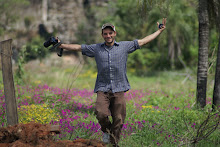
Istanbul to Odessa by BOAT
Odessa to Istanbul by BIKE
As I spin the globe and take stock of just how far Point A, Odessa, Ukraine, is from Point B, Istanbul, Turkey, it is hard to suppress a smile and a feeling that can be summed up as such: Hell Yeah.
Beyond the gratitude that I would like to convey to everyone who pumped the positivity in my name along my bicycle journey there is a question that I have been asked many times over and in many different languages that I would like to answer.
WHY? Why do you bike so much? What is the allure of biking so far?
The following is a bit of insight into the madness, or finely calibrated chaos, that makes jumping on a steel pony and pedaling fast and furious off towards the horizon so desirous.
A long distance hiking friend of mine has a superb phrase for the whole affair: a laughable distance.
1700 km across five different countries from Odessa to Istanbul is certainly a laughable distance. But then again, at times Friday night may seem like a laughable distance from Monday morning. Summer vacation a laughable distance away from the mid winter drear and retirement a laughable distance removed from the youthful days of college.
Prior to this trip I could only point out the countries of Ukraine, Moldova, Romania, Bulgaria and Turkey on a map. Knowing next to nothing about them besides their capital, shape and arbitrary color in which the mapmakers chose to shade them.
But a bicycle changes all that. Daily distances are limited by physical capability but the possibility of where to ride becomes infinite. Encounters and interactions with locals along the way become personal and extremely human. You are forced to relish the in betweens in terms of both time and place. There is a realness and rawness to every experience that truly tingles the emotions.
The travel is certainly felt in the legs, bones and muscles. You sleep like a baby. The heart and mind are constantly engaged. The journey becomes the focus and an intimacy with the land and life is created.
Rather than riding from Odessa to Istanbul, more poignantly put, I was riding through the daily life of Eastern Europe. Here is a bit of that story:
BRASOV, ROMANIA
I bought my bicycle off the rack in Istanbul for 200 bucks. A Turkish made, steel framed beast, it had no idea what kind of work out I was about to put it through. It was decidedly not meant to be ridden across Eastern Europe.
700km and 2 countries in from the start of the journey the wear and tear began to show.
Due to the weight of my backpack strapped to the back of the bicycle and the fact that I traversed the mountains of Transylvania all morning prior, where paved road turned to gravel which turned to dirt, the back tire tread wore thin and gave way to a spectacular blow out.
Late in the afternoon, with the sun setting over Transylvania, it was decision time.
What to do? I did what every one in their right mind does: Stall. I started to walk, well push the bike, in the forwardly direction as I contemplated hitching a ride to the nearest mechanic. Five kilometers on, walked more out of stubbornness in refusing to put the bike on a motorized vehicle than any lack of transportation offers, I arrived at a tire and auto body shop.
Although I consider myself a proficient bike mechanic, bicycle maintenance is definitely not my forte. Besides, finding a local bicycle repair shop and having them wrench on the bike for a while always leads to a memorable experience.
Arriving tired and sweaty, it was time for my nonexistent Romanian to all of a sudden become eloquent and insightful. Washing his hands with a greasy rag as he walked out of the garage I smiled at the mechanic and pointed to my bike.
Being a man of his trade and seeing the disastrous state of my back tire, the repair was easy to communicate. My presence on a bicycle in the middle of Romania however was a bit more complicated to convey. Using a few key words of country capitals and large towns and a combination of Spanish, English and Romania I made it clear that I had biked from Odessa and was heading to Istanbul. You would have thought I had hit him square in the stomach upon his realization of the length of my journey. Rolling his eyes in what I like to think of as admiration but was probably just disbelief, he began to shake his head, smile and laugh.
The bicycle repair now being secondary to the conversation at hand, he jumped up, dropped his tools and became quite animated. Grabbing a pen, he wrote the date 1944 on the back of an envelope and then proceeded to mimic a walking motion. Seeing that I was still with him, he painstakingly mimed that he was talking about his father.
My eyes dilated as I caught the gist of his story. It was my turn to feel a bit weak in the knees.
His father had walked over 700km from Odessa to Brasov, Romania in 1944.
My head started to spin, was he evading Nazi Germany, fleeing an advancing Russian Army or merely emigrating out of an occupied Ukraine.
Odessa to Brasov by bike in 2009. Now that is all good fun.
Odessa to Brasov by foot in 1944. Now that is some serious living history.
Leaving the mechanic behind with a healthy wave and riding on into the sun, I yearned to be able to speak Romanian, I yearned for the opportunity to meet that man’s father, I yearned to know the full story.
I rode on that day into the twilight, comforted by the good fortune of knowing that all of my laughable distances traveled throughout my life have been self created and journeyed by choice but equally saddened by the realization that the laughable distances traveled by most people the world over are borne out of necessity and forced upon them.
RAZGRAD, BULGARIA
First impressions live long in the memory. The town of Razgrad, 65 kilometers south of the Romania border on the northeastern plains of Bulgaria is mine in regards to the country of Bulgaria. Razgrad is what I like to call an “in between town.” Riding from Bucharest, the capital of Romania to Varna, a seaport and summer resort town on the Bulgarian Black Sea Coast some 300 km away, you have to stop somewhere to hang your hat and rest your bicycle. Razgrad it was.
A nondescript, agro-industrial town I could tell as soon as I entered the city proper that I was the only foreigner for miles. This is the draw of in between travel. Living squarely on Bulgarian terms, the rewards of unique cultural experiences are commensurate to the heightened challenges of communication, interaction and understanding.
Sitting down to dinner at an empty, outdoor restaurant, the Bulgarian owner came and joined me. Somehow the bike, helmet and weather worn map gave me away as being the exotic. Struggling to converse in broken English about the where’s, what’s and how’s of who I was the man kept saying “Ne Var” as he contemplated his next English word.
“Ne Var” roughly translates into What Else in Turkish. Finally, mustering the courage to shift conversational gears myself, I asked the man in Turkish if he spoke Turkish. With his eyes lighting up he immediately said yes (Evet) and our conversation took off, this time in Turkish. I told him that I was an American living in Istanbul, learning Turkish. He told me that the meal is on the house, leave everything where it is and come across the street to meet his friends.
Turns out his name is Ayhan and he is a Bulgarian Turk. Born here in Bulgaria but ethnically Turkish. A hold over or thrown back to the Ottoman time’s when the sultanate ruled over the land for nearly half a millennium. He learned Bulgarian as the national language; Russian in school under the yoke of the Communist regime and Turkish was kept close to the heart and true to its historical roots as the family language. To this day, ten percent of Bulgaria’s seven million strong population is still ethnically Turkish.
As we walked across the street sure enough there was another café, empty except for a lone occupied table. We headed straight for it. Switching from Turkish into a combination of Bulgarian and Russian, he introduced me to his three friends (the owners of the café and the ubiquitous barfly) and the questions abounded. With the arrival of another woman, things simultaneously got more complicated and yet simplified. This woman, a Bulgarian in her mid forties had lived in the States and spoke English. I asked where she had lived. She responded “St. Pete.” As it is, St. Petersburg, Florida meet Razgrad, Bulgaria.
There we were sitting around the table, confusing and understanding each other in a cacophony of three distinct language groups: English of Indo- European descent, Turkish of Turkic descent and Russian and Bulgarian of Slavic origin.
My map of Bulgarian stretched out across the table, covering the peanut dish and held down at the corners by half drunken bottles they all began to point out the most beautiful and must see parts of Bulgaria: the coast, the capital, the mountains. Everything they said except Razgrad.
Much to the contrary I try to explain that in fact that this very moment conversing with them here in Razgrad was worth all the tourist destinations in the country. They shook their heads collectively in disbelief.
This place is too boring, too normal they replied.
Genuine, true, everyday and ordinary. That’s what I say and that’s what makes it matter.
The rhythm of the conversation ebbed and flowed for a while longer. As I got up to leave, Ayhan came with me. He took my shoulder and as he guided me out of the restaurant he said in Turkish “Do make sure you see more of Bulgaria but you know what, every night we are here doing the same thing: talking about how there are no jobs, no money, nothing. But you came along, out of nowhere and made things exciting.”
Without question, as I share this normal, everyday Bulgarian experience with you, I am certain that they too are talking about me.
Ayhan had given me his cell phone number and I made a promise to call him when I reached Istanbul.
1700 kilometers ridden in three weeks. Odessa to Istanbul. A laughable distance between point A and point B. But in the end it was not the Mileage but the Mentality that counted and it was the people met along the way that gave life and meaning to the journey.
Showing posts with label Turkish Correspondence. Show all posts
Showing posts with label Turkish Correspondence. Show all posts
Saturday, August 1, 2009
Monday, June 29, 2009
OUT OF THE CLASSROOM

Almost a year on here in Istanbul and with countless hours of Turkish study under my belt, it was high time I got out of the classroom and put my linguistic learning to good use. Over the last few months I seized the golden opportunity of being a student (read spring break and post examinations) to close the books, leave the city behind and venture out into Turkey proper.
It is not fair to say I saw the “real” Turkey because this mega metropolis of Istanbul is indeed as real as it gets. However, it is on the mark to say I saw the “other” Turkey.
Anatolia, Asia Minor, Anadolu (in Turkish), how ever you want to call it, is the 98% of the country that runs from the Asian shores of the Bosphorus eastward to Georgia, Armenia, Iran, Iraq and Syria. Hemmed in on the north by the Black Sea and the Mediterranean on the south, Anatolia has been cris-crossed by humanity since time immemorial.
With close to 60 million Turks living in the mountains, valleys, plains and forests in between and 5000 years of history, there certainty was enough worth the while to visit, explore and understand.
GLOBALIZATION WHIPLASH
It is quite hip these days to think small, green and local. I for one am in full agreement, however with the caveat that globalization is probably the best thing that has even happened to us a humans. (To the planet, that’s a whole different story but we can leave it at this for now: We humans write the chapter and verse of our lives, Mother Earth will write the final page of our existence).
Contrary to popular belief, globalization is nowhere near being a new phenomenon.
With our first steps out of Africa and our first ships set sail upon the ocean blue, globalization is in fact the first thing we as humans exported. Language, culture, tools and goods. We all have them, want more of them and are willing to do what it takes to get them.
We as Americans, without globalization, first would not be Americans and secondly, if we overlooked the first reality, would be forced to subsist on tomatoes, corn and strawberries. A few of the only edible plants native to North America. Not a bad lot, but one cannot live on them alone no matter how tasty ketchup may be.
Globalization, whether good or bad is rather quite natural, constant and a human endeavor. It’s what we do. We don’t gaze upon the stars and close our eyes. We just build bigger and better telescopes. The rub is that its not globalization itself but the speed at which globalization happens which catches us all off guard.
On a lonely, wind swept rocky outcrop located deep in the southeastern corner of Turkey lies HOŞAP CASTLE. Built a half a millennium ago by a Kurdish King and still retaining multiple stories and nearly a hundred intact rooms, it gazes silently out from its commanding position over the dusty golden plains that stretch out towards Northern Iraq.
Arriving at the massive iron gate after a day of travel, my friend and I were greeted by the castle’s caretaker. Willing to swing open the castle’s doors for a small fee and allow us to penetrate the ancient defenses, we strike up a conversation about how we are Americans studying Turkish in Istanbul.
Over coming their fear and indulging their curiosity, the caretaker’s children come out of hiding and circle around us. Wanting to be friendly, we offer the kids some local fruit that we had just bought. Two of the three kids grab it eagerly, but one little boy abruptly recoils.
All of six years old, he had heard that we were Americans and told his father that he didn’t want to take the fruit because he didn’t want to catch the Swine Flu.
On a lonely, wind swept rocky outcrop located deep in the southeastern corner of Turkey, a child who can neither read nor write, knows that America is the source of Swine Flu. Globalization par excellence.
With a smile of astonishment on our face, we grabbed up our food and stormed the castle.
ORIGINS
The city of URFA in South Eastern Turkey is known as the prophet’s city. Rightly so.
Smack in the downtown area is a cave reckoned to be the birthplace of the Prophet Abraham (Ibrihim to Muslims). We are talking 1900 BC, the original promoter of monotheistic faith and thus technically the primogenitor of Judaism, Christianity and Islam. This is heavy stuff. As I bend down to catch a glimpse of the cave (certainly a minimalist approach regarding its interior decoration), I am struck by the fact that here before me are the stories of the three holy books, Torah, Bible and Koran, come to life.
Abraham, no longer a long ago man from a far away land but a real live human being.
Faith is what we all make of it, but it certainly has gravity when given historical context.
Although officially a secular country, Turkey is 99% registered Muslim and has the legacy of a five hundred year Ottoman-Islamic history. Thus, a large Mosque complex encloses the immediate surroundings of Abraham’s cave. Beautifully built of cut sandstone, the doors are open to any and all who come. Be it a purposeful pilgrim or an itinerant traveler.
The area is one of faith and family. But to this devotion I for one would like to add dialogue. Not seeing either in sight, I was taken a bit aback by the conspicuous lack of both a synagogue and church. Different strokes for different folks. I am certainly not an expert regarding history or religion but I do consider myself a believer and critical thinker.
Standing before the birthplace of a man paramount to all three major monotheistic religions. What better place to celebrate our similarities and come to terms with our differences. We humans are a funny sort however, sometimes are differences are not different enough for us to get along.
NEIGHBORLY RELATIONS
Bridges are highly functional. They are equally symbolic. In Northeastern Turkey lie the ruins of ANI, an ancient Armenian capital from the turn of the first millennium left abandoned in the no man’s land of the frozen Armenian Turkish Border.
Due to a long and entangled history of mutual accusations of genocide, invasion and cultural superiority Turkey and Armenia currently do not maintain official diplomatic relations and their border, perhaps 350 km of unbroken land, is definitively closed to all traffic.
In a rolling meadow ringed by snow capped mountains, the ruins of ANI preserve thousand year old Armenian cathedrals and what is considered to be the first Seljuk Mosque build in Anatolia (1072). Yet it also has areas off limits to visitors due to control by the Turkish military in the face of an undefined Armenian threat.
Spending the day picnicking, there wasn’t a soul in sight. Neither of the Turkish or Armenian variety.
Walking out of the eastern entrance of the Cathedral, the land descends sharply to the Arpa River, the physical land feature that delineates the official border of the two countries. On closer scrutiny, the structural remains of a massive, ancient stone bridge are clearly visible down below.
A thousand years ago, the two sides of the river, Turkey and Armenia, were connected.
Thoughts, people and trade flowed freely. Today the same bridge lies destroyed and forgotten. Communication between the two nations is forced at best.
Long ago the stone arches collapsed and the rocks fell into the river. The sturdy, weathered footings that remain however offer a silent, striking lesson on the imprudence of humanity for any one of us willing to look, listen and understand.
MESOPOTAMIA
Besides the more problematic ethnic and national appellations (Kurdistan) of the region, to call Southeast Turkey by its original name, you must reach back to the grand daddy of them all: Mesopotamia. Few words conjure up humanity and perhaps third grade history like that of Mesopotamia and its pair of River Guardians, the Tigris and the Euphrates.
The Fertile Crescent, the birthplace of civilization, present-day Iraq and an unfortunate quagmire of conflict, strife and violence. To the Mesopotamia Landscape, one can imagine, there is nothing new under the sun. As long as we humans are here, the cycle of life and death, peace and hostility will continue.
Happily however for the adventurous but safety conscious traveler (ME), following the Tigris and Euphrates Rivers upstream puts their source in Turkey. Perhaps it’s a hold over, deep down in our bones from way back when, some sort of bond of kith and kin harkening back to unknown original ancestors, but I felt a certain ethereal energy as I crossed the fabled Tigris River into Turkish Mesopotamia.
Truly, this sparkling blue water cutting a meandering path through the parched, patchwork terrain, provides the lifeblood to all. A hot early summer day painted with the colors of an azure blue sky and white billowy clouds and tempered by the cool waters of the Tigris makes for the ideal setting to relax riverside.
We sat with our feet dangling in the river. The rush of new water in this ancient river speaks in hushed tones of life past and present. As the afternoon lazily slips into twilight and the westering sun gives everything a golden glow our idyllic vision of this eternal landscape snaps back to reality.
Silhouetted against the sun, a man from one of the local restaurants that line the river was throwing the day’s trash into to the Tigris. Bottles and cans, reflecting the last glint of sunlight tossed right into the River of Life. Swept down stream, to begin its own journey through Mesopotamia.
EAST SIDE – WEST SIDE
Back in Istanbul, the source of the city’s vibrancy is clearly apparent: Anatolia. Over the millennium, whether people have come here to start over, to improve their lot or to forget, they have brought the magic and mystique of Anatolia with them.
Istanbul is a one of the great cities of the world, but what makes it so is that it is truly a world within a city. Istanbul reflects empires past and civilizations come and gone, but at its heart it draws its strength of character from its Anatolian roots.
It’s a “Too Much City”. Too much beauty, too much history, too much traffic, too many people, too many building, It is a place where incongruities of all shapes coincide and where excess and extremes reside.
When I arrived in the city back in August, a Turk told me that if you spend a year here in Istanbul, you will certainly die here.” I laughed it off then, but closing in on the year mark, the man’s remark seems prescient.
Not wanting to get caught by this city and country’s beautiful assassin, I plan to make moves. I’ll be home at the end of July.

Monday, June 1, 2009
A DRIP A DROP A DAMLAMA
DAMLAMAK – (TURKISH) TO DRIP
While working in Guatemala in 2006 as a Peace Corps Volunteer in the area of Post Hurricane Stan Disaster Relief and Reconstruction an experienced civil engineer who was working along side of me didn’t mince words:
“God may have given us water but we have to pay for the pipes.”
It is surprising how many people the world over still do not have access to clean, safe drinking water because of this simple statement.
Over the past year as the District’s Rotary Ambassadorial Scholar I have helped the Denville Rotary Club create a Matching Grant Project with my host club here in Istanbul, the Suadiye Rotary Club, that addresses this reality of water misallocation and the lack of appropriate plumbing.
The Matching Grant Project’s objective is to provide purified, drinkable water to four public schools in lower income districts on the Asian side of Istanbul. The schools are:
1)Cemile Besler Ilkogretim Okulu
2)Kayişdagi Arif Pasa Ilkogretim Okulu
3)Celal Yardimci Ilkokulu
4)Foundation for the Training and Protection of Mentally Handicapped Children
In spite of the tenuous economic and financial situation faced by every one throughout year, Rotary International approved the Matching Grant Project.
A total of 20,000 dollars was awarded and is now being put to good use.
During the month of June water filtration and UV purifying (sterilization) systems with self-closing faucets will be installed in the four schools. A Suadiye Club Rotarian estimates that a total of 400 self-closing faucets will be installed.
These taps will provide clean drinking water for the school children and conserve water that is being lost either through leaky faucets or children not closing them properly.
Coupled with this installation, a series of workshops will be given by the Suadiye Rotary members to instruct the students in the use of the self closing faucets (which are not a common feature of school water systems in Turkey) and educate them in the importance of water conservation.
After studying Turkish for the last ten months, the Suadiye Rotary Club has given be the honor and challenge to lead the first water conservation workshop. The catch is that I would be doing it in Turkish.
On Thursday May 28 the Matching Grant Project was officially begun with my presentation to 60 students between the age of 10-14 at the Cemile Besler Ilkogretim Okulu (Camile Besler Primary School) with my presentation entitled “Suyumuzunu Nasıl Tüketiyoruz/ How Do We Use Our Water.”
The day was fantastic fun. My exotic status as an American trying to speak in Turkish held the students captivated as my partner, Suadiye Rotarian Mr. Okyay Kaynak, could deftly translate “My Turkish” into a more polished and understandable “Their Turkish” when needed.
The children, myself and Mr. Kaynak conversed for an hour and a half covering the intended project topics of water conservation and how to use self closing faucets properly but also getting to the more important matters of Do I like Turkey, Is learning Turkish hard, What is my favorite soccer team, What is my favorite place to visit in Turkey, Do lions live in America, etc.
At the end of the presentation the following two questions came in rapid succession (and said in Turkish mind you): What is the importance of water in the world’s ecosystem and When will Swine Flu end in the United States?
After having the students and the rest of their classmates repeat in unison the question a number of times, I told them that they were good questions in deed and that I will have to learn more Turkish to give them a proper answer. I flashed the biggest smile I could and told them that I would get back them.
There is nothing like the beauty and danger of an open forum question and answer period with Turkish school children.
But to be honest, I plan to do just that: Get Back To Them. For me, this presentation was a great motivator both in terms of how far I have come in learning Turkish and how much farther that I want to go in understanding Turkish.
The Suadiye Rotary Club is grateful for Denville’s support and involvement in this Matching Grant Project. They are excited about the project’s installation and education of so many school children on such an important topic as water consumption and conservation. They are adamant to continue working with the Rotary Clubs of District 7470 to perform more projects in both Turkey and New Jersey.
I feel honored, as an Ambassadorial Scholar, to be part of this special connection between Denville and Suadiye, New Jersey and Istanbul , Rotary District 7470 and Rotary District 2420. I feel equally challenged to continue to strengthen this bond throughout the coming years One Turkish Word At A Time, One Drop of Water Saved At A Time.
While working in Guatemala in 2006 as a Peace Corps Volunteer in the area of Post Hurricane Stan Disaster Relief and Reconstruction an experienced civil engineer who was working along side of me didn’t mince words:
“God may have given us water but we have to pay for the pipes.”
It is surprising how many people the world over still do not have access to clean, safe drinking water because of this simple statement.
Over the past year as the District’s Rotary Ambassadorial Scholar I have helped the Denville Rotary Club create a Matching Grant Project with my host club here in Istanbul, the Suadiye Rotary Club, that addresses this reality of water misallocation and the lack of appropriate plumbing.
The Matching Grant Project’s objective is to provide purified, drinkable water to four public schools in lower income districts on the Asian side of Istanbul. The schools are:
1)Cemile Besler Ilkogretim Okulu
2)Kayişdagi Arif Pasa Ilkogretim Okulu
3)Celal Yardimci Ilkokulu
4)Foundation for the Training and Protection of Mentally Handicapped Children
In spite of the tenuous economic and financial situation faced by every one throughout year, Rotary International approved the Matching Grant Project.
A total of 20,000 dollars was awarded and is now being put to good use.
During the month of June water filtration and UV purifying (sterilization) systems with self-closing faucets will be installed in the four schools. A Suadiye Club Rotarian estimates that a total of 400 self-closing faucets will be installed.
These taps will provide clean drinking water for the school children and conserve water that is being lost either through leaky faucets or children not closing them properly.
Coupled with this installation, a series of workshops will be given by the Suadiye Rotary members to instruct the students in the use of the self closing faucets (which are not a common feature of school water systems in Turkey) and educate them in the importance of water conservation.
After studying Turkish for the last ten months, the Suadiye Rotary Club has given be the honor and challenge to lead the first water conservation workshop. The catch is that I would be doing it in Turkish.
On Thursday May 28 the Matching Grant Project was officially begun with my presentation to 60 students between the age of 10-14 at the Cemile Besler Ilkogretim Okulu (Camile Besler Primary School) with my presentation entitled “Suyumuzunu Nasıl Tüketiyoruz/ How Do We Use Our Water.”
The day was fantastic fun. My exotic status as an American trying to speak in Turkish held the students captivated as my partner, Suadiye Rotarian Mr. Okyay Kaynak, could deftly translate “My Turkish” into a more polished and understandable “Their Turkish” when needed.
The children, myself and Mr. Kaynak conversed for an hour and a half covering the intended project topics of water conservation and how to use self closing faucets properly but also getting to the more important matters of Do I like Turkey, Is learning Turkish hard, What is my favorite soccer team, What is my favorite place to visit in Turkey, Do lions live in America, etc.
At the end of the presentation the following two questions came in rapid succession (and said in Turkish mind you): What is the importance of water in the world’s ecosystem and When will Swine Flu end in the United States?
After having the students and the rest of their classmates repeat in unison the question a number of times, I told them that they were good questions in deed and that I will have to learn more Turkish to give them a proper answer. I flashed the biggest smile I could and told them that I would get back them.
There is nothing like the beauty and danger of an open forum question and answer period with Turkish school children.
But to be honest, I plan to do just that: Get Back To Them. For me, this presentation was a great motivator both in terms of how far I have come in learning Turkish and how much farther that I want to go in understanding Turkish.
The Suadiye Rotary Club is grateful for Denville’s support and involvement in this Matching Grant Project. They are excited about the project’s installation and education of so many school children on such an important topic as water consumption and conservation. They are adamant to continue working with the Rotary Clubs of District 7470 to perform more projects in both Turkey and New Jersey.
I feel honored, as an Ambassadorial Scholar, to be part of this special connection between Denville and Suadiye, New Jersey and Istanbul , Rotary District 7470 and Rotary District 2420. I feel equally challenged to continue to strengthen this bond throughout the coming years One Turkish Word At A Time, One Drop of Water Saved At A Time.
Sunday, May 10, 2009
BOY SCOUTS

Although a Scout must take off his uniform at the age of eighteen, the Boy Scout values learned however during his youth last a lifetime.
My name is Leo Redmond. I am 28 years old. I am an Eagle Scout from Troop 113 Rockaway, NJ of the Patriot’s Path Council. I currently live in Istanbul, Turkey serving as a Rotary Ambassadorial Scholar. In this capacity I am learning Turkish and performing community service projects with local Rotary Clubs in order to fulfill their motto of Service Above Self.
In a recent trip to the Republic of Georgia, a small nation nestled in the Caucasus Mountains located northeast of Turkey between the Black Sea and the countries of Russia, Armenia and Azerbaijan. I had an experience that returned me to my scouting roots.
Georgia is a country of 4.6 million people where the official spoken and written language is Georgian. To clarify, the Georgian language does not use the Roman alphabet like English or Spanish but instead employs its own separate letters collectively known as Kartuli. Thus, in the Georgian language (Kartuli), the country of Georgia is known as Sak’art’velo.
As I was walking around the city of Batumi, located in the southwestern corner of Georgia in what is officially known as the Autonomous Republic of Adjara, I turned a corner along the cobble stone streets of this colonial city and was struck silent by what I saw.
The words SCOUT MOVEMENT in large English letters were cast in a burnished bronze above the Fleur de lis on a wrought iron window grate of a one-story office building.
As happenstance would have it, my arrival and awestruck countenance occurred at 5 o’clock and coincided with a woman locking the door to leave for the evening.
She saw me, smiled and in English asked if she could help. Composing myself, I said that I was a Boys Scout from the United States of America. I pointed at the sign and curiosity getting the best of me, said that I wanted to know all about it. Could this be the same Scouts that has played such an important part in my life I wondered.
Her smile got larger and without hesitation she reopened the door and accompanied us in. Scout badges, pictures and equipment colored the office and were reminiscent of so many other scouting centers that I had visited before. In terms of geographic distance between the United States and Georgia I was worlds away from home, yet our shared enthusiasm and understanding of the tenets of the Boy Scout Organization provided for an electrifying sense of familiarity and kinship.
I had just made the acquaintance of Ms. Shorena Lomadze, the Chairman of the Adjarian Organization of the Georgian Scout Movement.
This dedicated and dynamic women had single handedly brought the Scouting Movement to the Autonomous Republic of Adjara twelve years ago. According to the World Organization of the Scout Movement (www.scout.org) which represents 160 international recognized scout organizations, the Georgian Scout Movement (Scouts of Georgia) was officially founded in 1994 and currently has 1240 member Scouts.
As 5 pm quickly turned to 6 pm and onwards I realized that Ms. Lomadze was graciously giving me carte blanche of her time and an open invitation to the city of Batumi and the country of Georgia. She told of how she started with next to nothing and only a handful of interested youths and has since grown into an organization of 150 strong. She says that a particular Scoutmaster for the Sam Houston Council that she met at a World Jamboree she attended has helped her immeasurable. More than financial support, the two councils have forged a relationship that sees the regular exchange of Scouts and the collaboration on international projects.
The Scouts of the Adjarian Organization of the Georgian Scout Movement consists of both males and females. They perform community service projects in the city of Batumi (122,000 people), hold camping trips and run leadership programs in the surrounding snowed capped Caucasus Mountains and promote the ideals of the Boy Scouts through their actions and efforts.
To honor my visit to her home country, although unexpected and unannounced, Ms. Lomadze presented me with one of the first Georgian Scout Patches. A circular patch, stitched in blue upon a white background, it shows the words “Scouts of Georgia” written in both English and Georgian (Kartuli) along the top and bottom and the Fleur de lis in the center colored in blue, yellow, red and green. These colors represent the Autonomous Region of Adjara, the country of Georgia and the Boys Scout Movement.
This patch, worn and well traveled, is a valued gift and as I turn it over in my hand, it has come to tell its story of a genuine connection and commitment between all of us through the Scouting Movement and the hope of a lasting friendship to come.
Ms. Lomadze exemplifies what and who it is to be a Scout and lives the Boy Scout Motto Ikavi Mzad. To Be Prepared.
She has taken the noble endeavor of Boy Scouts and put those values learned into daily practice so that all youths the world over should have the opportunity to learn and live from them. This is a challenge for all of us to follow, whether in Batumi, Georgia, Istanbul, Turkey, Rockaway, New Jersey or a Hometown near you.
Saturday, January 10, 2009
TURKISH: A LOGIC OF ITS OWN

Best put, Turkish is a delicious language. It is as complex, flavorful and enigmatic as the indigenous Turkish cuisine it more often than not accompanies. Like the country itself, located at a geographic and historic crossroads, the language is a mix of native Turkic and foreign Arabic, Farsi, French and English words. Served up hot and quick, Turkish certainly takes a discriminating palette and discerning set of ears to bring out and truly appreciate its real zest.
A quick look around my Turkish Language Class reveals an equally diversified demographic of Turkish Language Learners. There are students from Morocco, Syria, Palestine, Uzbekistan, Kazakhstan, Russia, Slovenia, Germany, France, Italy, Greece, Hungary, Bolivia, Peru and the Ukraine all using and learning Turkish as the Lingua Franca (Just remember to grab the right dictionary on your way out).
Eight months on, my Turkish is simmering slow and steady. My notebooks are full of Turkish verse that is waiting patiently to be committed to memory and to be put into practice with enough repetition, to come fluidly out of my mouth. In the meantime, I’ll maintain a balanced diet of Turkish culinary masterpieces being recklessly jammed down my mouth.
“Yavash Yavash.” Slowly, slowly. Even the word itself, according to a local waiter allowing me to order in Turkish, makes you slow down and allows pause for thought.
And time you do need, for like all great chefs, left alone to their own devices, the Turkish Linguistic Kitchen can cook up some full course meals:
“Gelemeyebilirim” I might not be able to come.
Only to be outdone by the following:
Cekoslavakyalilastiromadiklarimizdan.
Are you one of those people who we unsuccessfully tried to make resemble the citizens of Czechoslovakia?
Thank goodness, the fall of communism has assigned that country and all its attendant epithets to the historical dustbin.
Q. How does this happen?
A. Through the process of Agglutination where grammatical functions are indicated by attaching various suffixes on to the stem word. (They key word there is various.)
Single words can be entire sentences and complete sentences can be expressed in a single word.
Turkish is as sophisticated and elegant as a mongrel language can be.
Expressive and delectable. Yavash, Yavash!
Now I’ll take a mouthful of that.
Sunday, December 21, 2008
ISTANBUL STREET TRAFFIC DEFENSE

A city continuously built upon itself for the last two thousand years leaves little room for traffic management. The Istanbul motor vehicle pedestrian relationship is tenuous at best.
Sidewalks, if they exist at all, are just as likely to be parked on as walked on.
During peak hours, they in fact turn into auxiliary passing lanes. Woe be the unsuspecting pedestrian who doesn’t give ample space to the motorcycle deliveryman careening towards him along the cobble stone walkway.
A Turkish friend kindly provided the following Turkish Diving Educational Theory:
Green light means GO.
Yellow Light means GO QUICKLY.
Red Light means GO CAREFULLY.
Life on foot in the urban, historic jungle of Istanbul is full on. Add inclement weather into the mix and walking from Point A to Point B becomes an Olympic Event.
Most people carry umbrellas not just to avoid the rain but for personal protection against the splash of passing cars.
With puddles deep and sordid and cars racing along with seeming abandon an untimely misstep too close to the curb can leave one drenched and dejected. Wielding your umbrella like a highly trained martial artist, one must zig zag through the street, calculating the distance and velocity of on coming cars and time to impact with the nearest puddle. At the precise moment where car tire hits puddle and puddle discharges its filthy watery city mire, one most whip their umbrella down from overhead to shield the lower half of the body from imminent deluge.
One can imagine, it Is a very quick but unfortunately experiential learning curve
One foot in front of the other, with umbrella in hand, parry – counter parry, Istanbul pedestrian life marches on.
HIT THEM WHERE IT COUNTS
Walking home late one night from class. A women steps out of the pharmacy.
She has a baby in one hand and a can of Coca Cola and 2 packs of cigarettes in the other.
My only thought was whether she needed a prescription for that or not.
One of the Istanbul Soccer Teams (Galatasary) is building a new soccer stadium. Over the past few weeks the construction workers have been up in arms because their pay has been in arrears. When a threatened strike didn’t persuade the owned to cough of up the cash, they made their final ultimatum: If we don’t get paid we will hangs flags and banners of Arch Rival soccer team Fenerbache all over the stadium.
Money swiftly changed hands.
Monday, December 15, 2008
CHICKEN OR BEEF
To its credit and the delight of all hungry passengers aboard, Turkish Airlines still provides in-flight meals carefully packaged and catered to the diverse tastes of all their valued customers.
Back in December I had the privilege of partaking in one of these delectable mile high meals on my way from Istanbul to Beirut. However, before tucking in to this culinary repast an important decision needed to be made. Yes, for indeed economy class even had the luxury to choose. Chicken or Beef. More precisely, Mediterranean Marinated Chicken Breast or Grilled Turkish Meatballs.
I could hardly contain myself. What a fantastic turn of luck. You could have put me in the cargo hold as long as you gave me a bag of peanuts. This was first class treatment.
There was one glaring misstep however, in the way this dinner party played out.
At exactly the moment the head flight attendant begin the requisite, yes boring but dare I say vital safety briefing, an assistant took with eager initiative, the opportunity to pass out the carefully prepared Turkish Airways Menu Cards. Chicken or Beef.
My mouth watered as I clutched my very own complimentary copy. Chicken or Beef.
Both with assorted vegetables, fresh bread, tea or coffee and some sort of Turkish dessert to help ease the digestive process. My head was spinning. Don’t screw this up Leo.
As I looked around me, all of my fellow travel companions sat transfixed by their own menus. Each locked in a personal struggle of choice. Chicken or Beef.
I chanced to look forward down the aisle. There was the head flight attendant, now donning a silly yellow life preserver and oxygen mask, droning on about safety procedures and pointing perfunctorily towards the emergency exits. Chicken or Beef.
Check Please…. She just might know something that we hungry passengers don’t. I tucked my menu into my shirt pocket, close to my heart and gave a quick listen.
It’s been proven time and again, in the unlikely event of a plane crash, those passengers that have taken the time (30 seconds) to listen attentively to the safety briefing and consciously located their nearest exits are more likely to survive. Chicken or Beef.
Hell, I’ll take the bag of peanuts and decide between the Front and Side Exit.
Fear Not, I am a proud member of the Turkish Airlines Mileage Club and have diligently notified them of my concern. How can you enjoy your meal when you are worrying about emergence exits?
Chicken or Beef. I’ll see you on the ground.
Back in December I had the privilege of partaking in one of these delectable mile high meals on my way from Istanbul to Beirut. However, before tucking in to this culinary repast an important decision needed to be made. Yes, for indeed economy class even had the luxury to choose. Chicken or Beef. More precisely, Mediterranean Marinated Chicken Breast or Grilled Turkish Meatballs.
I could hardly contain myself. What a fantastic turn of luck. You could have put me in the cargo hold as long as you gave me a bag of peanuts. This was first class treatment.
There was one glaring misstep however, in the way this dinner party played out.
At exactly the moment the head flight attendant begin the requisite, yes boring but dare I say vital safety briefing, an assistant took with eager initiative, the opportunity to pass out the carefully prepared Turkish Airways Menu Cards. Chicken or Beef.
My mouth watered as I clutched my very own complimentary copy. Chicken or Beef.
Both with assorted vegetables, fresh bread, tea or coffee and some sort of Turkish dessert to help ease the digestive process. My head was spinning. Don’t screw this up Leo.
As I looked around me, all of my fellow travel companions sat transfixed by their own menus. Each locked in a personal struggle of choice. Chicken or Beef.
I chanced to look forward down the aisle. There was the head flight attendant, now donning a silly yellow life preserver and oxygen mask, droning on about safety procedures and pointing perfunctorily towards the emergency exits. Chicken or Beef.
Check Please…. She just might know something that we hungry passengers don’t. I tucked my menu into my shirt pocket, close to my heart and gave a quick listen.
It’s been proven time and again, in the unlikely event of a plane crash, those passengers that have taken the time (30 seconds) to listen attentively to the safety briefing and consciously located their nearest exits are more likely to survive. Chicken or Beef.
Hell, I’ll take the bag of peanuts and decide between the Front and Side Exit.
Fear Not, I am a proud member of the Turkish Airlines Mileage Club and have diligently notified them of my concern. How can you enjoy your meal when you are worrying about emergence exits?
Chicken or Beef. I’ll see you on the ground.
Monday, November 17, 2008
A Turkey For A Turkey
To be honest, it is a mere matter of coincidence that brings these two words into an awkward relationship between the Turkish and English languages. At once a country proud and strong and yet also a large bird, proud and edible….
Resisting the temptation of an overabundance of awful jokes thus far, I’ll cave in just this once and proffer a quick linguistic insight:
Turkey in Turkish is Turkiye (TURK KEY YEAH). Part of the Turkic language family which originated in Central Asia thousands of years ago and now stretches from the Mediterranean Coast and Eastern Europe northeastwards to Siberia and Western China.
This is why Turkey and Turkmenistan, although on opposite sides of the Caspian Sea, share the same root in their namesake.
It has nothing to do with the migratory habits of that tasty little bird given guest of honor status at almost all American homes this weekend.
The Mediterranean to Siberia. A quick glance of the map would show that this is a huge swath of land. A quick and honest reflection will show just how startlingly little we as Americans truly know of this land, people and culture.
At present there are roughly 200 million native speakers of a Turkic Language. Turkish Proper, as it is called, is by far the most widely spoken, accounting for close to 40% of all Turkic speakers.
Believe it or not, within the Turkic language family there are an astounding 30 different languages. Once again, America’s attempt at high school foreign language studies seems woefully limited (Romance language any one?). Some of the Turkic languages include: Azeri (Azerbaijan), Kazakh (Kazakhstan), Uzbek (Uzbekistan), Turkmen (Turkmenistan) and Uyghur (China).
The major characteristic features of the Turkic languages are vowel harmony, extensive agglutination by means of suffixes and Subject – Object – Verb word order.
What this means is that these languages are hard. Damn hard and require an entirely different manner of thinking in order to get the words out of your mouth and your point across.
Subject –Object – Verb word order is in a sense “backwards” to the Subject – Verb – Object order that we English speakers are accustomed to.
I go to the store. Becomes in Turkish I the store to go.
Ben bakkala gitiyorum.
You can imagine how anything more substantial can become, complicated, confusing and frustrating rather quickly.
Agglutination means you just keep adding suffixes onto root words to create sentences. Thus, sentences can be single words where those words can be 18-23- 30 letters long. Yowser-
Here’s a baby one: Bekleyebilecegim. I will be able to wait.
With the use of suffixes there are no prepositions in Turkish.
So much for Sister Anna’s Fifth Grade grammar class.
As one young Turkish friend of mine flippantly told me, as a wry smile cracked across his face and his eyes lit up, “Don’t worry Leo, learning Turkish is easy- all our words are short.”
Right, root words of 3 to 4 letters a piece that can morph into anaconda size behemoths within the blink of an eye.
Now back to that bird, before it gets cold.
Turkey, the bird, in Turkish is Hindi.
A nice five-letter word having nothing to do with Hinduism or the Hindi language of Northern India.
We’ll leave it at that.
Happy Thanksgiving. Sukran Gunu as it would be said in Turkish.
Resisting the temptation of an overabundance of awful jokes thus far, I’ll cave in just this once and proffer a quick linguistic insight:
Turkey in Turkish is Turkiye (TURK KEY YEAH). Part of the Turkic language family which originated in Central Asia thousands of years ago and now stretches from the Mediterranean Coast and Eastern Europe northeastwards to Siberia and Western China.
This is why Turkey and Turkmenistan, although on opposite sides of the Caspian Sea, share the same root in their namesake.
It has nothing to do with the migratory habits of that tasty little bird given guest of honor status at almost all American homes this weekend.
The Mediterranean to Siberia. A quick glance of the map would show that this is a huge swath of land. A quick and honest reflection will show just how startlingly little we as Americans truly know of this land, people and culture.
At present there are roughly 200 million native speakers of a Turkic Language. Turkish Proper, as it is called, is by far the most widely spoken, accounting for close to 40% of all Turkic speakers.
Believe it or not, within the Turkic language family there are an astounding 30 different languages. Once again, America’s attempt at high school foreign language studies seems woefully limited (Romance language any one?). Some of the Turkic languages include: Azeri (Azerbaijan), Kazakh (Kazakhstan), Uzbek (Uzbekistan), Turkmen (Turkmenistan) and Uyghur (China).
The major characteristic features of the Turkic languages are vowel harmony, extensive agglutination by means of suffixes and Subject – Object – Verb word order.
What this means is that these languages are hard. Damn hard and require an entirely different manner of thinking in order to get the words out of your mouth and your point across.
Subject –Object – Verb word order is in a sense “backwards” to the Subject – Verb – Object order that we English speakers are accustomed to.
I go to the store. Becomes in Turkish I the store to go.
Ben bakkala gitiyorum.
You can imagine how anything more substantial can become, complicated, confusing and frustrating rather quickly.
Agglutination means you just keep adding suffixes onto root words to create sentences. Thus, sentences can be single words where those words can be 18-23- 30 letters long. Yowser-
Here’s a baby one: Bekleyebilecegim. I will be able to wait.
With the use of suffixes there are no prepositions in Turkish.
So much for Sister Anna’s Fifth Grade grammar class.
As one young Turkish friend of mine flippantly told me, as a wry smile cracked across his face and his eyes lit up, “Don’t worry Leo, learning Turkish is easy- all our words are short.”
Right, root words of 3 to 4 letters a piece that can morph into anaconda size behemoths within the blink of an eye.
Now back to that bird, before it gets cold.
Turkey, the bird, in Turkish is Hindi.
A nice five-letter word having nothing to do with Hinduism or the Hindi language of Northern India.
We’ll leave it at that.
Happy Thanksgiving. Sukran Gunu as it would be said in Turkish.
Sunday, September 21, 2008
RESIDENCY NOWHERE – A Foreign Sense of Belonging
Human beings’ desire for belonging is a shared and fundamental trait. Our creation of a bureaucratic system seemingly designed to expressly deny the fulfillment of this desire is equally universal and all together astounding.
I arrived in Turkey on a student visa painlessly obtained over the summer via two trips to the New York City Turkish Consulate, a transaction fee of $37, the completion of a few documents and the submission of a handful of those ubiquitous passport size photos.
With my Turkish visa good for a year I cheerfully assumed that I was footloose and fancy free upon clearing immigration at Istanbul’s International Airport. Safe and sound upon foreign soil, it was time to tuck my passport carefully away and begin to build a new life in Turkey as a foreign exchange student excited to learn Turkish.
However, upon further scrutiny of the finer print of Turkish immigration procedures during my initial weeks of stay in country and the collective rumblings of fellow University students I quickly realized that much more was involved in order to claim my Turkish residency necessary for my year -long study abroad program.
Stated plainly, although in Turkish, on the back side of my immigration card was the single sentence: ‘Turkish Student Visa holders need to apply for a Residency Permit within thirty days of arrival.’ Further investigation, through snap translations by any Turk with the slightest knowledge of English willing to help turned up the fact that the application for a Residency Permit with its attendant laundry list of requirements needed to be completed in person and directly within those now dwindling thirty days. The kicker being that all information was to be provided in Turkish and required to be answered in Turkish.
Arriving in Istanbul not speaking a word of Turkish, suddenly my basic, although intensive, Turkish language classes became woefully inadequate. Rather than grant me license to live in Turkey for the year, my student visa in effect had merely gained me admission to the true Turkish Bureaucratic Dance of Belonging for long-term residency. I had thirty Days or I would face undisclosed legal sanctions.
Although I pride myself on being a nimble and limber fellow ready for any and all challenges, here I was now squarely out of my league. Bank statements, official documents from the University, a street address of an apartment I was still looking for, mother and father’s name all had to procured and translated into Turkish. Copies in triplicate, Turkish, Turkish, Turkish, those pesky passport photos again, this time in an absurd amount, everything type written and in capital letters.
Thirty Days. This was going to take some serious linguistic, cultural, administrative and bureaucratic gymnastics.
After an all consuming and endless amount of scheming and treasure hunting for directions, paperwork and translations, that at times was tedious, ridiculous and outright illogical, I arrived at the fortress-like Foreign Residence Office ready to begin the intricate Turkish Bureaucratic Dance of Belonging. I was certainly not the lead for this number and only hoped that I could follow the dance steps closely.
There I was, having arrived just as the building opened but my no means first in line, between the girl from the Ukraine and the woman from Kyrgyzstan; a young Lebanese man pressing tightly against my back as he in turn jockeyed for position with the multitude of applicants behind him. With my hands clenched tightly to the counter so ingeniously constructed whereas one had to simultaneously stand on tip toes and yet bend down, head against the grimy Plexiglas, in order to “converse” with the woman behind the counter I held my ground. The throng of people pushing from behind was constant and physical. I flexed my arms outward in response to protect my space. I had waited hours to reach this counter and I wasn’t going anywhere.
Beyond the great divide of Plexiglas sat the finest assembly of Turkish bureaucratic officers. Diligently, if lifelessly, cutting and pasting and stamping and laminating. Enthusiasm having been checked at the door, work continued a pace as the overhead air condition leaked water onto a dangerously large puddle growing in the middle of the floor that threatened the spider web of extension cords that criss–crossed the office. As the officer workers mindlessly stepped over this mid office water hazard without a second thought, the young care free chai server, dishing out small shot glasses of piping hot sweet tea on a massive silver platter to all workers looking for an excuse to remain unproductive adeptly danced around the puddle without soaking his feet or spilling a single drop of tea.
Shoving my paperwork through the mail slot of an opening, there was a pit that began to grow in the bottom of my stomach and resonated to the tips of my fingers. As a momentary pause to gather up my documents turned into an eternity of scrutiny, I prayed silently that everything was duly in order and the immigration clerk wouldn’t ask me any hard questions –any question at all really— and the desperate pleas of “please do not send me back to the end of the line” were hard to suppress.
Within a few moments, papers were shuffled, stamps were meted out and signatures were scribbled. The only true human interaction was a quick smile as the woman behind the counter quickly grabbed my eighty Turkish Lira as payment for services rendered.
Three times the woman said that I was finished. Three times I didn’t believe her until she spelled it out in no uncertain terms that all I needed to do now was to comeback next week to pick up my official residency documents. Not wanting to shift my weight even an inch and allow some else, equally as frantic and frazzled, to push in from behind and steal away my coveted spot at the counter, I didn’t leave until she raised her hand, extended her finger and pointed me to the door. I still had my doubts about the success of my residency application and thus my ability to remain in Turkey as I followed her silent instructions away from the counter and melted back into the masses.
The Stars and Stripes forever. Without question, I am an American by birth and more importantly by choice. However, upon returning to scene of the crime exactly one week later – again early but nowhere near first in line—and receiving my Turkish Residence Card, the sky has never been bluer, the Turkish flag never flown more proudly and as I knelt down upon my knee to kiss the ground beneath my feet, the Earth never tasted sweeter.
I practically skipped out of the fortress of Foreign Residence Permits, my heart bursting with song as this Turkish Bureaucratic Dance of Belonging had triumphantly come to a close. As I swiveled and weaved through the crowd in search of the exit –and the light of day— I bade farewell and good luck to those who were just arriving: a young married couple, a woman with a newborn baby, the troupe of foreign students and well dressed but powerless businessmen. Bewildered and exasperated. All looking to belong.
It is of interest to note that most countries and in fact most people are most welcoming when they know that you are leaving. An indefinite stay however always causes a bit of consternation and unfortunately a more reluctant form of acceptance.
I arrived in Turkey on a student visa painlessly obtained over the summer via two trips to the New York City Turkish Consulate, a transaction fee of $37, the completion of a few documents and the submission of a handful of those ubiquitous passport size photos.
With my Turkish visa good for a year I cheerfully assumed that I was footloose and fancy free upon clearing immigration at Istanbul’s International Airport. Safe and sound upon foreign soil, it was time to tuck my passport carefully away and begin to build a new life in Turkey as a foreign exchange student excited to learn Turkish.
However, upon further scrutiny of the finer print of Turkish immigration procedures during my initial weeks of stay in country and the collective rumblings of fellow University students I quickly realized that much more was involved in order to claim my Turkish residency necessary for my year -long study abroad program.
Stated plainly, although in Turkish, on the back side of my immigration card was the single sentence: ‘Turkish Student Visa holders need to apply for a Residency Permit within thirty days of arrival.’ Further investigation, through snap translations by any Turk with the slightest knowledge of English willing to help turned up the fact that the application for a Residency Permit with its attendant laundry list of requirements needed to be completed in person and directly within those now dwindling thirty days. The kicker being that all information was to be provided in Turkish and required to be answered in Turkish.
Arriving in Istanbul not speaking a word of Turkish, suddenly my basic, although intensive, Turkish language classes became woefully inadequate. Rather than grant me license to live in Turkey for the year, my student visa in effect had merely gained me admission to the true Turkish Bureaucratic Dance of Belonging for long-term residency. I had thirty Days or I would face undisclosed legal sanctions.
Although I pride myself on being a nimble and limber fellow ready for any and all challenges, here I was now squarely out of my league. Bank statements, official documents from the University, a street address of an apartment I was still looking for, mother and father’s name all had to procured and translated into Turkish. Copies in triplicate, Turkish, Turkish, Turkish, those pesky passport photos again, this time in an absurd amount, everything type written and in capital letters.
Thirty Days. This was going to take some serious linguistic, cultural, administrative and bureaucratic gymnastics.
After an all consuming and endless amount of scheming and treasure hunting for directions, paperwork and translations, that at times was tedious, ridiculous and outright illogical, I arrived at the fortress-like Foreign Residence Office ready to begin the intricate Turkish Bureaucratic Dance of Belonging. I was certainly not the lead for this number and only hoped that I could follow the dance steps closely.
There I was, having arrived just as the building opened but my no means first in line, between the girl from the Ukraine and the woman from Kyrgyzstan; a young Lebanese man pressing tightly against my back as he in turn jockeyed for position with the multitude of applicants behind him. With my hands clenched tightly to the counter so ingeniously constructed whereas one had to simultaneously stand on tip toes and yet bend down, head against the grimy Plexiglas, in order to “converse” with the woman behind the counter I held my ground. The throng of people pushing from behind was constant and physical. I flexed my arms outward in response to protect my space. I had waited hours to reach this counter and I wasn’t going anywhere.
Beyond the great divide of Plexiglas sat the finest assembly of Turkish bureaucratic officers. Diligently, if lifelessly, cutting and pasting and stamping and laminating. Enthusiasm having been checked at the door, work continued a pace as the overhead air condition leaked water onto a dangerously large puddle growing in the middle of the floor that threatened the spider web of extension cords that criss–crossed the office. As the officer workers mindlessly stepped over this mid office water hazard without a second thought, the young care free chai server, dishing out small shot glasses of piping hot sweet tea on a massive silver platter to all workers looking for an excuse to remain unproductive adeptly danced around the puddle without soaking his feet or spilling a single drop of tea.
Shoving my paperwork through the mail slot of an opening, there was a pit that began to grow in the bottom of my stomach and resonated to the tips of my fingers. As a momentary pause to gather up my documents turned into an eternity of scrutiny, I prayed silently that everything was duly in order and the immigration clerk wouldn’t ask me any hard questions –any question at all really— and the desperate pleas of “please do not send me back to the end of the line” were hard to suppress.
Within a few moments, papers were shuffled, stamps were meted out and signatures were scribbled. The only true human interaction was a quick smile as the woman behind the counter quickly grabbed my eighty Turkish Lira as payment for services rendered.
Three times the woman said that I was finished. Three times I didn’t believe her until she spelled it out in no uncertain terms that all I needed to do now was to comeback next week to pick up my official residency documents. Not wanting to shift my weight even an inch and allow some else, equally as frantic and frazzled, to push in from behind and steal away my coveted spot at the counter, I didn’t leave until she raised her hand, extended her finger and pointed me to the door. I still had my doubts about the success of my residency application and thus my ability to remain in Turkey as I followed her silent instructions away from the counter and melted back into the masses.
The Stars and Stripes forever. Without question, I am an American by birth and more importantly by choice. However, upon returning to scene of the crime exactly one week later – again early but nowhere near first in line—and receiving my Turkish Residence Card, the sky has never been bluer, the Turkish flag never flown more proudly and as I knelt down upon my knee to kiss the ground beneath my feet, the Earth never tasted sweeter.
I practically skipped out of the fortress of Foreign Residence Permits, my heart bursting with song as this Turkish Bureaucratic Dance of Belonging had triumphantly come to a close. As I swiveled and weaved through the crowd in search of the exit –and the light of day— I bade farewell and good luck to those who were just arriving: a young married couple, a woman with a newborn baby, the troupe of foreign students and well dressed but powerless businessmen. Bewildered and exasperated. All looking to belong.
It is of interest to note that most countries and in fact most people are most welcoming when they know that you are leaving. An indefinite stay however always causes a bit of consternation and unfortunately a more reluctant form of acceptance.
Wednesday, September 10, 2008
SUNDAY MORINING CONGREGATION
Six weeks on in a city six centuries Muslim, I have been able to peel back the hands of time and discover the still thriving religion of the city once known as the Second Rome. Perhaps better stated, I have found the western import of the original Rome, alive and kicking and having weathered the years of a city that pugnaciously sits in the tidal basin of life, religion and history.
Saint Anthony’s Catholic Church
Sent Antuan Kilisise
Istiklal Caddesi
Istanbul, Turkey
Although I enjoyed the opportunity and experience of living in an ardently Muslim neighborhood, albeit in an intensely secular state, complete with headscarves, mosques and pray beads and my Turkish neighbors, most Turks in fact, have welcomed me with unfailing hospitality and warmth, I have longed for the familiar and my own sense of community.
Muslim or not, the five times daily call to prayer sung ethereally in Arabic from the Mosque’s minaret causes one to reflect, to think and ultimately to pray. It is truly a vocal, timely reminder to help keep one’s priorities in check. Even my visits to Mosques throughout the city, although initially historically and architecturally motivated, have provided a time of spiritual quiet, stillness and reflection.
The Blue Mosque (Sultan Ahmet Mosque) and the Aya Sophia notwithstanding. However, the need to participate in the celebration of mass, both a product of my upbringing and a conscious choice of faith from St. Cecilia to Georgetown University and Peace Corps Paraguay to Panama, still remained.
Sunday Morning Mass at Saint Anthony’s welcomes an eclectic mix of Catholics befitting such an international, historic and criss-crossed city.
It is even quite possible to define it as a true catholic gathering of Catholics. Most striking and remarkable was the fact that it happened on an ordinary Sunday in September. A centuries old cathedral, with high arching ceilings and intricately inlaid mosaics located in the heart of Istanbul was standing room only. Presided over by Father Joseph from Romania, the church was filled with parishioners from all walks of life motivated by a sense of faith and duty.
By no means trying to diminish their stature, the standard issue Italians and Spaniards were in attendance. The Korean choir was led by a trio of beautiful Vietnamese vocals and without question, the Filipinos played an active role in the celebration. They however just could not fit into my attempted alliteration. English was the lingua franca of the service. Finally and most intriguing was the unusually (again from my perspective) large proportion of, for a lack of a more intimate and accurate term, Africans present in prayer. It was an awesome sight to see and never one to allow my “demographically discerning eye” rest I am interested in learning their story.
It was truly a powerful and awe inspiring experience to see and feel a cathedral in full swing for the service of daily mass. I could not help but feel reenergized and excited as I stepped out of the shadows of the worn wooden doors and on to the sunlight stone patio, to be greeted by the international parochial community of Catholics who had splintered back into their multitude of languages and identities.
Content to know that I was welcomed back next week.
Saint Anthony’s Catholic Church
Sent Antuan Kilisise
Istiklal Caddesi
Istanbul, Turkey
Although I enjoyed the opportunity and experience of living in an ardently Muslim neighborhood, albeit in an intensely secular state, complete with headscarves, mosques and pray beads and my Turkish neighbors, most Turks in fact, have welcomed me with unfailing hospitality and warmth, I have longed for the familiar and my own sense of community.
Muslim or not, the five times daily call to prayer sung ethereally in Arabic from the Mosque’s minaret causes one to reflect, to think and ultimately to pray. It is truly a vocal, timely reminder to help keep one’s priorities in check. Even my visits to Mosques throughout the city, although initially historically and architecturally motivated, have provided a time of spiritual quiet, stillness and reflection.
The Blue Mosque (Sultan Ahmet Mosque) and the Aya Sophia notwithstanding. However, the need to participate in the celebration of mass, both a product of my upbringing and a conscious choice of faith from St. Cecilia to Georgetown University and Peace Corps Paraguay to Panama, still remained.
Sunday Morning Mass at Saint Anthony’s welcomes an eclectic mix of Catholics befitting such an international, historic and criss-crossed city.
It is even quite possible to define it as a true catholic gathering of Catholics. Most striking and remarkable was the fact that it happened on an ordinary Sunday in September. A centuries old cathedral, with high arching ceilings and intricately inlaid mosaics located in the heart of Istanbul was standing room only. Presided over by Father Joseph from Romania, the church was filled with parishioners from all walks of life motivated by a sense of faith and duty.
By no means trying to diminish their stature, the standard issue Italians and Spaniards were in attendance. The Korean choir was led by a trio of beautiful Vietnamese vocals and without question, the Filipinos played an active role in the celebration. They however just could not fit into my attempted alliteration. English was the lingua franca of the service. Finally and most intriguing was the unusually (again from my perspective) large proportion of, for a lack of a more intimate and accurate term, Africans present in prayer. It was an awesome sight to see and never one to allow my “demographically discerning eye” rest I am interested in learning their story.
It was truly a powerful and awe inspiring experience to see and feel a cathedral in full swing for the service of daily mass. I could not help but feel reenergized and excited as I stepped out of the shadows of the worn wooden doors and on to the sunlight stone patio, to be greeted by the international parochial community of Catholics who had splintered back into their multitude of languages and identities.
Content to know that I was welcomed back next week.
Saturday, August 30, 2008
THE GAS IS ALWAYS GREENER
Without question the numbers speak for themselves - both in terms of the international price of a barrel of crude and the retail price of a gallon at the pump. $110, $120, $130, $140…. 1.89, 2.29. 3.59, 4.02…..
Clock watching these days is a bit passé. Pump price watching is much more in vogue-
To be honest, this is all well and good and will hopefully lead to some necessary, if painful, changes in habit and consumption.
However, without context most of America’s recent complaints about rising gas prices become some what irrelevant and unfounded. Hear me out-
On foot, weaving through the continuously congested streets of Istanbul, I am constantly astounded by a singular number that beckons from the neon towers of all corner gas stations: 2.85 Turkish Lira per 1 Liter of Gas.
Seemingly innocuous at first glance, “hell, where I come from that number is pushing four dollars,” a quick mathematical conversion disabuses an unwitting foreigner’s naivete and reveals the true cost of living.
1 US Dollar = 1.20 Turkish Lira (granted the value fluctuates daily)
1 US Gallon = 3.78 Liters
3.78 x 2.85 (price in Turkish Lira for 1 liter) = 10.773 Turkish Lira
Thus here in Turkey, the price of ONE Gallon of Gas is 10.773 Turkish Lira
Or, to make it that much more explicit:
IN TURKEY ONE GALLON OF GAS COSTS 8.97 DOLLARS
(without splitting hairs, any where between 8 and 10 bucks).
10.773 Turkish Lira / 1.20 Turkish Lira = 8.97 USD
Yowser! How in the….? Who in their right mind…? Something needs to be done about this… I stammer, to no one as a multitude of pedestrians rushes by me on their way to work and cars queue up without a second thought at the pump---
Am I the only one who is indignant here?
That remains to be seen, but the cold, unsatisfactory answer to why gas prices are so high here in Turkey is TAXES. The government has placed such a high tax burden on gas consumption to try to dissuade the public from excessive consumption.
Judging by the middle of the day city wide traffic jam, urban infrastructure is certainly not up to par and this tax scheme hasn’t quite had its desired effect (although government coffers are pleasantly swollen).
And so it is, to the every day ordinary Turkish consumer, eight to ten dollars for a gallon of gas- indefinitely.
Ambulatory and car crazy Turks would kill to be in America’s four dollar a gallon shoes-
All situations are different but please do strive for a deeper perspective and plan accordingly.
Post script: On a brighter note- Here in Istanbul cigarettes only cost 3 -4 dollars a pack. Now, I’ll smoke to that.
Clock watching these days is a bit passé. Pump price watching is much more in vogue-
To be honest, this is all well and good and will hopefully lead to some necessary, if painful, changes in habit and consumption.
However, without context most of America’s recent complaints about rising gas prices become some what irrelevant and unfounded. Hear me out-
On foot, weaving through the continuously congested streets of Istanbul, I am constantly astounded by a singular number that beckons from the neon towers of all corner gas stations: 2.85 Turkish Lira per 1 Liter of Gas.
Seemingly innocuous at first glance, “hell, where I come from that number is pushing four dollars,” a quick mathematical conversion disabuses an unwitting foreigner’s naivete and reveals the true cost of living.
1 US Dollar = 1.20 Turkish Lira (granted the value fluctuates daily)
1 US Gallon = 3.78 Liters
3.78 x 2.85 (price in Turkish Lira for 1 liter) = 10.773 Turkish Lira
Thus here in Turkey, the price of ONE Gallon of Gas is 10.773 Turkish Lira
Or, to make it that much more explicit:
IN TURKEY ONE GALLON OF GAS COSTS 8.97 DOLLARS
(without splitting hairs, any where between 8 and 10 bucks).
10.773 Turkish Lira / 1.20 Turkish Lira = 8.97 USD
Yowser! How in the….? Who in their right mind…? Something needs to be done about this… I stammer, to no one as a multitude of pedestrians rushes by me on their way to work and cars queue up without a second thought at the pump---
Am I the only one who is indignant here?
That remains to be seen, but the cold, unsatisfactory answer to why gas prices are so high here in Turkey is TAXES. The government has placed such a high tax burden on gas consumption to try to dissuade the public from excessive consumption.
Judging by the middle of the day city wide traffic jam, urban infrastructure is certainly not up to par and this tax scheme hasn’t quite had its desired effect (although government coffers are pleasantly swollen).
And so it is, to the every day ordinary Turkish consumer, eight to ten dollars for a gallon of gas- indefinitely.
Ambulatory and car crazy Turks would kill to be in America’s four dollar a gallon shoes-
All situations are different but please do strive for a deeper perspective and plan accordingly.
Post script: On a brighter note- Here in Istanbul cigarettes only cost 3 -4 dollars a pack. Now, I’ll smoke to that.
Saturday, August 23, 2008
LIFE ON THE TURKISH STREET
Using a bit of internet resourcefulness and a great deal of on the ground detective work, after two weeks of couch surfing I have officially taken up residence here in the great city of Istanbul. I am just one more immigrant washing up on the shores of time, history and collective memory of this throbbing mega metropolis.
If the city herself does not as yet know that I have arrived, surely my new street has meet my presence with a cautious, curious, welcoming eye. In the heart of Istanbul, in the district of Tophane, the street is a dizzying mix of Turks, Kurds and Gypsies a short walk from the Bosphorus Straight. Tophane in Turkish actually means cannonball foundry (or literally house of the cannonball) and is a reference to the defensive cannonball foundry which was constructed by one of the first Ottoman Sultans in the late 15th century and until today looms large over the neighborhood.
Fortunately these days, enemies of the great city are few and far between and large maritime attacks are no longer en vogue. All that remains are the massive cruise ships which make Istanbul their port of call. Once docked along the quay these cruise ships dwarf the exquisitely constructed mosques that line the Bosphorus and blot out the view to Anatolia, the Asian side of the city. They are indeed that big and thus offer a perversely delicious broadside for an errant, if anachronistic cannonball.
Yet the foundry of Tophane remains silent. Forlorn and brooding, as if there is still a chip on her should, yearning for one more opportunity to lash out and show her bygone Ottoman greatness and potency.
With the neighborhood thoroughly protected, let’s go to the street. Picture scenes from the Godfather, when a young Don Corleone is living in the immigrant tenement neighborhoods of New York City in the early 20th century.
Here is the Turkish version. Four and five stories turn of the century apartment buildings line a narrow, winding street where all windows are open, freshly washed laundry hangs across and every imaginable family member leans out partaking in a daily conversation that must be centuries old.
Family life explodes across every available surface and space as women lower baskets from fourth story windows to haggle and purchase fresh produce from the passing vendor in the streets. Simultaneously cacophonous and melodic, there is an urban Turkish melody that is created. Drifting upwards towards the sky in jabs, rises and lulls the collective speech of the street offers an exotic rendition of an otherwise mundane Turkish daily life.
Having three large windows of my own facing the street, I duly plan to take up my place in the window and join in the Turkish chatter. A basket and rope are on the list of provisions to buy. It will be quite a linguistic challenge to haggle effectively with a man two stories down without receiving bruised tomatoes or incorrect change.
Unlike the young Don Corleone, I do not foresee any roof top escapades but rather my main concern will be to see if I can secure a wireless Internet connection in this throwback of an Ottoman neighborhood.
Do write to the address above. Your mail is always much appreciated and we shall see just how nimble the Turkish post can be. Perhaps you could send it via Carnival Cruise Lines; they are here three times a week
If the city herself does not as yet know that I have arrived, surely my new street has meet my presence with a cautious, curious, welcoming eye. In the heart of Istanbul, in the district of Tophane, the street is a dizzying mix of Turks, Kurds and Gypsies a short walk from the Bosphorus Straight. Tophane in Turkish actually means cannonball foundry (or literally house of the cannonball) and is a reference to the defensive cannonball foundry which was constructed by one of the first Ottoman Sultans in the late 15th century and until today looms large over the neighborhood.
Fortunately these days, enemies of the great city are few and far between and large maritime attacks are no longer en vogue. All that remains are the massive cruise ships which make Istanbul their port of call. Once docked along the quay these cruise ships dwarf the exquisitely constructed mosques that line the Bosphorus and blot out the view to Anatolia, the Asian side of the city. They are indeed that big and thus offer a perversely delicious broadside for an errant, if anachronistic cannonball.
Yet the foundry of Tophane remains silent. Forlorn and brooding, as if there is still a chip on her should, yearning for one more opportunity to lash out and show her bygone Ottoman greatness and potency.
With the neighborhood thoroughly protected, let’s go to the street. Picture scenes from the Godfather, when a young Don Corleone is living in the immigrant tenement neighborhoods of New York City in the early 20th century.
Here is the Turkish version. Four and five stories turn of the century apartment buildings line a narrow, winding street where all windows are open, freshly washed laundry hangs across and every imaginable family member leans out partaking in a daily conversation that must be centuries old.
Family life explodes across every available surface and space as women lower baskets from fourth story windows to haggle and purchase fresh produce from the passing vendor in the streets. Simultaneously cacophonous and melodic, there is an urban Turkish melody that is created. Drifting upwards towards the sky in jabs, rises and lulls the collective speech of the street offers an exotic rendition of an otherwise mundane Turkish daily life.
Having three large windows of my own facing the street, I duly plan to take up my place in the window and join in the Turkish chatter. A basket and rope are on the list of provisions to buy. It will be quite a linguistic challenge to haggle effectively with a man two stories down without receiving bruised tomatoes or incorrect change.
Unlike the young Don Corleone, I do not foresee any roof top escapades but rather my main concern will be to see if I can secure a wireless Internet connection in this throwback of an Ottoman neighborhood.
Do write to the address above. Your mail is always much appreciated and we shall see just how nimble the Turkish post can be. Perhaps you could send it via Carnival Cruise Lines; they are here three times a week
Subscribe to:
Posts (Atom)