Sunday, August 26, 2012

PANAMA

COMARCA NGABE BUGLE

Tuesday, June 12, 2012

Continental Synapse

The crenellated castle walls stood crumbing for centuries. The staccato slap of bare feet against stone and the occasional whack of a soccer ball against the once formidable meter thick walls are the only echo of a by gone era of ramparts and rockets.

Jutting out to sea at the very northwest edge of the African continent, the old city— al medina— of Tangier keeps a watchful gaze on the Atlantic Ocean, Mediterranean Sea and its rocky reflection, the Rock of Gibraltar, a mere ten miles to the north.

The byzantine streets, predating the adjective itself, wind deep into the city center without a thought of an escape. Vendor’s stalls, motorbikes, and pedestrians vie for the precious free space offered in the back alleyways. The city swirls with the scents, spices and sophistication of two colliding continents. The population erupts in a cacophony of Arabic, Berber, French and Spanish. As a crossroads of civilizations, commerce and culture compete to be the champion of conversation.

Mint tea, hot and copious, serves as the elixir of life; keeping those who imbibe upright and active. The call to prayer cuts the commotion to silence with a single Allahu Akbar, reminding the faithful of the celestial traverse of the sun and the presence of a higher authority.

Tuesday, May 15, 2012

CLIMB ON


The 18 volt pneumatic hammer action drill grinds to a halt.

The rock is too hard for the power tools on hand. The midday tropical sun mercilessly bakes my body, making putty out of my black rubber soled climbing shoes. I hang, tired and scorched, as if on a vertical granite frying pan. My belay partner below is no more fortunate. Suffering the same sun, he holds me in place, waiting for word of what will come next.

Whether it is the bit, the battery or a problem with the motor itself, the outcome is the same: the drill is silent (just another 10 kilos of metal strapped to my harness) much like the rock face has been for millennia.

We are half way through setting the third bolt of a seven bolt route. The first route ever attempted on this mountain – Cerro Mbatovi. Loosely translated from the indigenous Guarani as ‘Balcony of the Gods’ or ‘Window to Heaven,’ Cerro Mbatovi is a solitary rock massif rising abruptly out of the central Paraguayan plains in the Department of Paraguarí. Its rock head caps an apron of subtropical forest. The summit approach requires an arduous bushwhack through jungle underbrush and a hard rock scramble above tree line. Untouched and unclimbed, Cerro Mbatovi offers a rock climber's dream: a wall of first ascents.

Not to be bested, out comes the Petzl Rock Pic and mini sledgehammer. Setting the pic in the half finished hole, the operation is straightforward if brutal: A whack of the hammer followed by a quarter turn of the pic. Hammer drives pic; pic chisels rock. Repeat for forty-five minutes. This bolt will be secured by hand.

Welcome back to rock climbing in Paraguay. A mix of modern technology and old-fashioned rock climbing determination set in the heart of the South American continent.

Two years ago Rock and Ice Magazine (see article http://rockandice.com/news/500-Paraguay-An-Emerging-Scene) relayed the activity of Paraguay’s nascent rock climbing scene to the world. In the interim, climbers Jonathan Bibee and Dale Helm, aided by Mexican climber Victor de Leon and a growing cadre of home-grown talent, have made steady progress.

Successfully bolting two dozen routes in the Cerro Cora climbing area, 60 km to the northwest, in the town of Tobati. The pair has set their sights on Cerro Mbatovi. To say Bibee and Helm have discovered these climbing locales would be unjust. The Paraguayans have known of these rocks for centuries. The two climbers just see them with a new set of eyes: offering the country a new sport and the worldwide climbing community a new climbing destination.

“Ita Jupi”— rock climbing in Guarani— is wide open for exploration, development, conservation, and celebration. Cerro Mbatovi's climbing future remains to be written.

Tuesday, April 10, 2012

Sunday, February 12, 2012

Canal Correspondence


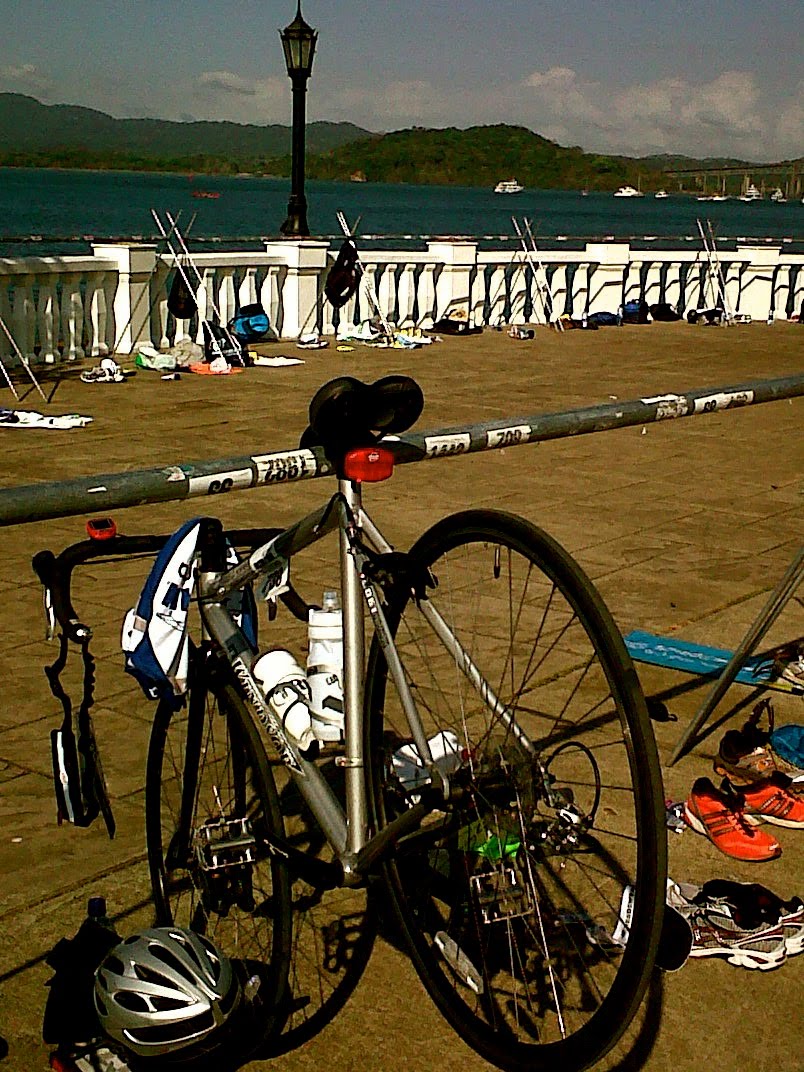
The Panama Canal has cut through the Central American isthmus and connected the Caribbean and Pacific Ocean for a century. This morning a small cadre of dedicated athletes swam through it, biked over it and ran along side it.

In hosting its first ever ‘half ironman’ -a 1.2 mile swim, 59 mile bike, and 13.1 mile run— the City of Panama turned over this iconic venue –a sea level canal framed by the juxtaposition of jungle covered hills and gleaming skyscrapers— to top flight triathletes and endurance amateurs alike.

As cargo ships steamed north toward the Miraflores Locks, swimmers’ arms rose and fell with disciplined cadence in the canal’s current as they entered the Pacific. Transforming themselves into cyclists, the triathletes rode over the Bridge of the Americas –the first bridge to span the canal– for a thirty-mile there and back. Trading wheels once more for pure human locomotion, the triathletes ran the remainder of the race on a ribbon thin causeway constructed from the canal’s excavation.

One Lance Armstrong –seven time winner of the Tour de France and cancer survivor- graced the race with his presence; immediately granting the inaugural competition with prestige and worldwide recognition. With the carriage of a Greek god, Armstrong held the lead until the final moments when a New Zealand competitor bested him.

Panama, home to three million inhabitants stuck to a jungle green landmass shaped like a stick of gum, is stretched by contradiction and cultural complexity. Boasting a $5.25 billion dollar canal amplification project for a waterway that generates millions of dollars in weekly revenue and a highly developed financial sector, Panama still harbors a subsistence farming, lack of potable water poverty rate of ~15%. In addition, expanding American Baby Boomers’ beachfront enclaves now but up against autonomous indigenous regions of the Ngabe Bugle, Kuna Yala, Wounaan and Embera who have managed to maintain their distinctive, centuries old cultural traditions.

Much like the efforts of any triathlete. Investment in expensive, technologically advanced equipment (feather weight shoes, carbon fiber bikes, enlarged canal locks) can only take Panama’s social and economic development so far. It is only the huge human component which makes success achievable: the hours of countless physical training, the extraordinary effort needed to execute community level capacity building programs.

The original fitness guru Jake Lalane is famous for saying: “Train for life as if it were an Olympic event.” Today’s triathletes epitomized this statement. Panama's development efforts should take note. Hosting its first half ironman is a good start, but completing the competition and improving the quality of life of its citizens is a whole different challenge.

Monday, December 5, 2011

In Pursuit of Peace: Mark it on your Calendar

The following photos were selected to grace the cover and the month of March in the 2012 Returned Peace Corps Volunteers International Calendar.

Please click here to view the entire calendar.


PANAMA

The beans, handpicked and slow roasted, are taken from the fire and set in a large wooden bowl to cool. The inescapable aroma of coffee permeates the highlands of tropical Panama. Served strong, dark and sweet, coffee is more than a hot beverage to get the morning started. Offered to all visitors, it is a mark of hospitality, an invitation for intimacy, and the Jimenez family brews an impeccable cup. Here Kayme picks through the cooling beans, adding anise leaves, snatching up the best ones to pop in her mouth. Soon, the beans will be ground, pressed, and shared by all.


MOLDOVA

The afternoon silence is torn by the rolling thunder of wheel on rail as the train trundles into the station in Chisinau, Moldova, the capital of Europe’s poorest country. The locomotive chokes to a stop, towering over the central platform. Patient, a woman waits as the hiss of the diesel engine fades to silence and stillness reclaims the afternoon. Deliberate, she stands and walks purposefully to the train’s door. Slow. Steady. She grabs the handrail, steps up, and boards the train. All are aboard, waiting to depart.

Sunday, November 13, 2011

Cerro Mbatovi: Balcony of the Gods


Loosely translated from Guarani as "The Balcony of the Gods," Cerro Mbatovi rises abruptly out of the grasslands of the Department of Paraguari. A solitary rock massif, Cerro Mbatovi represents the newest locale of a nascent rock climbing scene in Paraguay.

The summit approach requires an arduous bushwack through jungle underbrush and a hard rock scramble above tree line. Untouched and unclimbed, Cerro Mbatovi offers a rock climber's dream: a wall of first ascents. Currently being explored via top ropes and "bee veil rappels" (for red jungle wasp control) to develop potential rock climbing routes, Cerro Mbatovi's climbing future remains to be written.

Here is a link to the first article about rock climbing in Paraguay published on Rock and Ice, an international rock climbing magazine.